Many custom options...


And formats...



Not what you want?
Try other similar-meaning words, fewer words, or just one word.
Only Human in Chinese / Japanese...
Buy an Only Human calligraphy wall scroll here!
Personalize your custom “Only Human” project by clicking the button next to your favorite “Only Human” title below...
1. Human Nature
2. Human Race / Humanity / Mankind
3. The Tao or Dao of Being Human / Humanity
5. Morning Dew
6. Men Die for Wealth, Birds Die for Food
8. Birth Old-Age Sickness Death
9. Mermaid
10. Ichigo
11. Hitori
12. Star Man
13. Life is Short
14. Fire and Water Have No Mercy
15. Mermaid / Merman
16. Relax
17. Life is Short
18. Holy Man / Saint
20. Life is Good
21. Five Precepts
22. Life in Balance / Balancing Life
23. Enjoy Life
24. Life is Good / Life is Beautiful
25. Kansei Engineering / Sense Engineering
26. Life Goes On
27. Body
28. Siddhartha
29. Pain
30. The Buddha is in Each Sentient Being
31. Tengu
32. Sword of Death
34. Contentment
35. Forgiveness
Human Nature
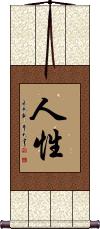
人性 is a title that is the essence of what it means to act and be human.
These two characters refer to the way we are as people.
人性 is also sometimes translated as human personality, human instinct, humanity, or humanism.
The first character literally means human or people.
The second character means nature. It can also mean property, quality, attribute, or essence. It can even be a modifier like “-ity” or “-ness,” which is why this word is also translated as “humanity.”
Human Race / Humanity / Mankind
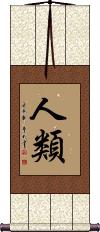
人類 is the way to say mankind or humankind in Chinese.
It's kind of the “animal title” for humans. 人類 is the word you would use if you said this phrase in Chinese, “Mammals include dolphins, monkeys, dogs, and humans among others.”
人類 is a weird selection for a calligraphy wall scroll. But a customer begged me to add this word.
The Tao or Dao of Being Human / Humanity
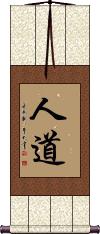
人道 is literally the “The Way of Being Human,” or “The Human Way.” It can also be translated as “humanity.”
人道 has a secondary meaning of “sidewalk” as in “the way for people to walk” (in Japanese and Korean only). But as calligraphy artwork, nobody will read it with that translation.
Please note that there are two ways to Romanize Dao or Tao (Daoism = Taoism). It's the same word in Chinese.
Empathy / Humanity
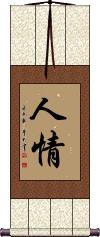
人情 is a title that can apply to a lot of meanings, including humanity, empathy, kindness, sympathy, human nature, human emotions, or human interaction.
Morning Dew
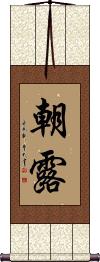
朝露 means morning dew in Chinese and Japanese.
In the Buddhist context, it figuratively represents the precarious brevity of human life, how ephemeral our life and possessions are, or how one should see human life as transient.
Men Die for Wealth, Birds Die for Food
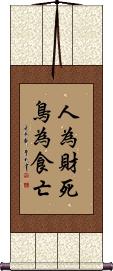
人為財死鳥為食亡 is a Chinese proverb that literally states that human beings will die for riches, just as birds will for food.
Figuratively it means that man will do anything in his means to become rich. Personally, I think dying for food is a more noble cause.
Often translated as “Men die in pursuit of wealth, birds die in pursuit of food. The 人 in this proverb just means human, so “men” is a placeholder for human with that translation - an English language problem that we have no easy gender-neutral nouns.
This proverb is meant to serve as a warning about the follies of greed.
Life is a Dew Drop
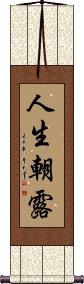
人生朝露 is a proverb that means “human life is like morning dew.”
Figuratively, this suggests the ephemeral and precarious nature of human existence.
Also translated as:
Man's life vanishes like a drop of dew.
A person's life is as fleeting as morning dew.
Life is as transient as morning due.
Birth Old-Age Sickness Death
Born to Suffer
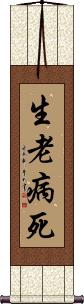
生老病死 means “to be born, to grow old, to get sick and to die” or “birth, aging, sickness, and death.”
This is an old somewhat-morbid Chinese proverb that is also used in Korean and Japanese. It figuratively means the fate of humankind (i.e. mortality) or suggests that we are all born to suffer.
In the Buddhist context, there are the “four inevitables in human life” or “four afflictions that are the lot of every human” known as “四苦” (literally “four afflictions”). Sometimes this proverb is written with that affliction character, 苦, at the end like 生老病死苦.
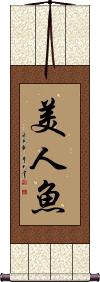
Mermaid
Ichigo
Japanese animation character
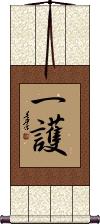
一護 is Ichigo, as in 黒崎一護 (Kurosaki Ichigo), the Japanese animation character who is part human but with transient Shinigami powers.
Hitori
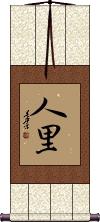
This is a Japanese given name, 人里, which romanizes as Hitori.
The meaning is something like “human habitation.” The first Kanji means a person, and the second means village.
Star Man
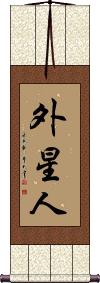
外星人 means “star man” or “space alien” in Chinese.
It is not literally man as in male, but human - as the word 人 does not have a gender attached.
Life is Short
A 100-year-old is but a traveler passing through this life
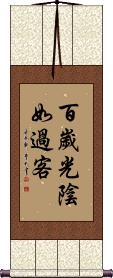
百歲光陰如過客 directly translates as: [Even a] hundred-year-old [person] is [just a] traveler passing by.
The simple message is, “Human life is short.” Of course, there is an unspoken suggestion that you should make the best of your time here on earth.
Fire and Water Have No Mercy
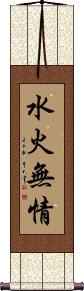
水火無情 is a Chinese proverb that means “fire [and] water have-not mercy.”
This serves to remind us that the forces of nature are beyond human control.
Some may also translate this as “implacable fate.”
Mermaid / Merman
(Unisex)
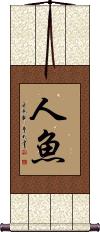
人魚 is the Japanese Kanji, Korean Hanja, and Chinese word for “merman” or “mermaid.”
It literally means “human fish.”
人魚 is a non-gender-specific or unisex word in all three languages.
Relax
Chill Out
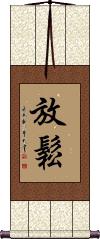
This means to relax in Chinese.
In most cases it's used to suggest that a person “relax,” “hang loose” or “chill out.”
In context where this word is not applied to a human, it can mean to loosen, as in to loosen a knot in a rope.
Life is Short
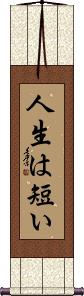
人生は短い is “life is short” in Japanese.
The character breakdown:
人生 (jinsei) life (i.e., conception to death); human life, living, lifetime.
は (ha/wa) particle (means “is” in this case).
短い (mijikai) short.
Note: Because this selection contains some special Japanese Hiragana characters, it should be written by a Japanese calligrapher.
Holy Man / Saint
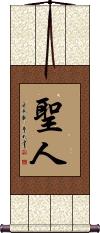
聖人 can mean saint, sage, or holy man.
Note: There is more than one way to express this idea. This one really matches “Holy man” because the second character means “human” or “person” (therefore, this could equally mean “Holy woman”).
Live for What You Love
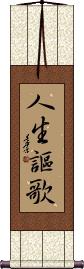
人生謳歌 means “live for what you love” in Japanese.
The first two characters mean “human life” or simply “living.” The last two characters mean “merit,” “prosperity,” or “what you enjoy.” This phrase can suggest working or staying busy for your own goals (in your career).
See Also: Prosperity
Life is Good
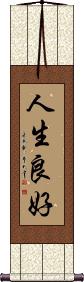
人生良好 means “life is good” in Japanese.
The first two characters mean “life” (as in your or a human lifespan).
The last two characters mean “good.”
This also makes sense in Chinese but it reads more like, “life is all right.”
Five Precepts
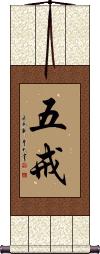
五戒 is the title or name for the five precepts of Buddhism.
These are prohibitions against killing, theft, sexual misconduct, lying, and intoxication.
Also phrased as commandments against murder, stealing, adultery, false speech, and consuming intoxicating liquors.
These five precepts or “pañca-veramaṇī” apply to the Buddhist laity as well as monks and nuns. The observance of these five ensures rebirth in the human realm.
Life in Balance / Balancing Life
The art of balancing your life
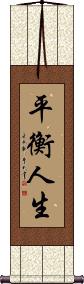
This 平衡人生 title suggests that you are actively trying to keep your life in balance.
Think of this as the action verb of seeking or having a balanced life.
The first two characters mean balance, equilibrium, or keeping things equal.
The last two characters mean “life.” Literally “human life.”
Enjoy Life
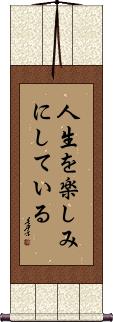
人生を楽しみにしている is one way to write “enjoy life” in Japanese.
The character breakdown:
人生 (jinsei) life (i.e. conception to death) human lifetime, living.
を (o) connecting particle.
楽しみ (tanoshimi) enjoyment; pleasure; anticipation; looking forward to.
に (ni) connecting particle.
し (shi) to do; to cause; to become; to make (into).
て (te) connecting particle.
いる (iru) indicates continuing action or resulting state.
Note: Because this selection contains some special Japanese Hiragana characters, it should be written by a Japanese calligrapher.
Life is Good / Life is Beautiful
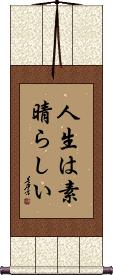
人生は素晴らしい means “life is good,” “life is great,” or “life is beautiful” in Japanese.
The first two characters mean “life” (as in your or a human lifespan).
The third character kind of means “is.”
The last five characters are a long adjective that means wonderful, splendid, and/or magnificent. In the context of life, it reads more like good or beautiful.
Note: Because this selection contains some special Japanese Hiragana characters, it should be written by a Japanese calligrapher.
Kansei Engineering / Sense Engineering
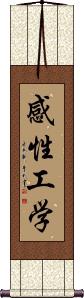
In short, 感性工學 or Kansei engineering involves collecting data on human experiences with a product and then designing or engineering improvements based on those experiences or “senses.”
Some may define Kansei as “engineering around the human experience.”
There is a lot more to know about Kansei, but if you are looking for this word, you probably already know the big picture.
Note: This term is very new in China and is only used by businesses, factories, and engineers that are implementing TQM principles. While the characters have the same base meaning in both languages, this is a Japanese title that flows back into the Chinese language (in history, most things flowed from China to Japan). To a Chinese person unfamiliar with this concept, they may interpret this as “sense vocational studies,” which doesn't make much sense. You may have to explain the intended meaning to some Chinese viewers. But that can make it a great conversation piece.
Kansei is also a newer term in Korean and is only used in certain parts of the industry, with the definition of “Sensory Engineering.” Not yet in widespread use in Korea.
Above is the modern Japanese version of this title. The last character has a Traditional Chinese version, making this 感性工學 instead of 感性工学. If you want the Traditional Chinese version, please include special instructions or email me so that I make sure the calligrapher writes the version you want.
See Also: Kaizen
Life Goes On
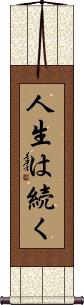
人生は続く is a Japanese phrase that expresses, “Life Goes On.”
The first two characters mean “life” (literally “human life”).
The third character is a particle that connects the ideas in this phrase.
The last two characters mean “to continue,” “to last,” “to go on,” and “to occur again and again.”
Note: Because this selection contains some special Japanese Hiragana characters, it should be written by a Japanese calligrapher.
Body
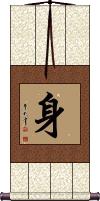
身 is how to write “body” as in your human body, in Chinese, Japanese Kanji, and Korean Hanja.
Depending on the context and certain language issues, this character can also mean: main part, hull, oneself, somebody, person, I, me, sword, lifetime, one's station in life, etc.
While this written word is universal in three languages, it still makes a rather odd selection for a wall scroll. Also, they tend to use 体 (karada) in Japanese for the body (depending on context).
See Also: Karada
Siddhartha
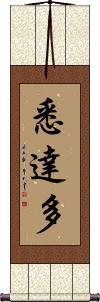
悉達多 is the name Siddhartha (as in Siddhartha Gautama), the personal name for Śākyamuni.
This same Buddha is also known as “Shakyamuni Gautama,” “Gotama Buddha,” or “Tathagata.”
Siddhartha Gautama was a spiritual teacher in the northern region of the Indian subcontinent who founded Buddhism. He is generally seen by Buddhists as the Supreme Buddha (Sammāsambuddha) of known human history.
The actual meaning of this name in Chinese is the realization of all aims, or simply being prosperous.
This name is sometimes romanized from the original Sanskrit or Pali as Siddhattha (from Siddhattha Gotama), Siddharth, Siddhārtha, or Sarvāthasiddha.
Siddhārtha or Sarvāthasiddha can also be written as 悉達, 悉多, 悉多頞他, or 悉陀.
Pain
ache / sorrow
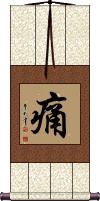
痛 means pain in Chinese and old Korean Hanja. It also means pain/hurt/bruise in Japanese but is seldom seen as a single Kanji (usually, at least a Hiragana is added to make the word “itai” which is what a Japanese person will scream when they are in pain).
Depending on the context, this word can mean hurt, ache, sorrow, or refer to damage to a human body. As a single character, the possible meanings are very open - so you can decide what it means to you, as long as the general meaning is still “painful.”
See Also: Hurt
The Buddha is in Each Sentient Being
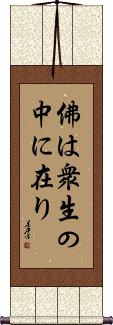
佛は衆生の中に在り is “Butsu wa shujo no naka ni ari” and means that the Buddha (potential for Buddhahood) exists in all beings in the universe.
So yes, your dog has the potential to be a Buddha (but only in a future reincarnation as a human). But all things, from the tiny cricket to the humpback whale have Buddha nature within them. If one takes the time to look and contemplate, one will see the Buddha in all things.
In Japan, sometimes the Buddha character is written 仏 instead of 佛, so you might see the whole phrase written as 仏は衆生の中に在り.
Note: Because this selection contains some special Japanese Hiragana characters, it should be written by a Japanese calligrapher.
Tengu
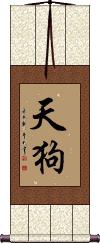
天狗 is the Japanese title for Tengu, which roughly translates as “heavenly dog.”
Tengu is a type of legendary creature found in Japanese folk religion and is also considered a type of Shinto god (kami) or yōkai (supernatural being).
The origin is Chinese, though this term is seldom used in Chinese anymore. It was a dog-like Chinese demon (Tiangou)
Although the title contains the word “dog,” the tengu are often depicted with human and bird-like characteristics. Sometimes they have large noses or beaks like birds.
Sword of Death
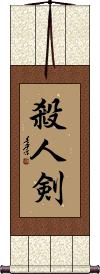
殺人剣 is a Japanese title for “Death Sword,” “Life Taking Sword,” or “satsujinken.”
This is the opposite of katsujinken or the “life-saving sword.” This title is not as commonly used in Japanese but pairs well when hung with katsujinken.
The first two Kanji are a word that translates as homicide, murder or kill (a person). 殺人剣 is specifically to kill a person (as the second character means person or human) as opposed to an animal, etc.
The last Kanji is the Japanese variant of the originally-Chinese character for a sword.
See Also: Katsujinken
Goodness / Good Deed
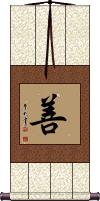
善 means goodness, virtue, good deed, charitable, benevolent, well-disposed, nice, pleasant, kind, or simply, “good.”
善 is the kind of good that applies to someone's good character, or a good person in general.
Referring to someone with this word means that they have a well-aimed moral compass, and are charitable, giving, wise, and honest. Basically, this is a blanket statement for every good trait a human can have or all the things that make someone good.
In another context, it can mean to improve or perfect something or refer to someone who is good at something.
Contentment
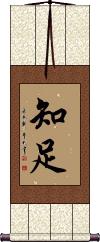
知足 means content with one's situation or to know contentment (hence happiness).
From the Zen Buddhist context, Chisoku or 知足 (knowing what’s enough) means always to know and be
satisfied with one’s lot.
Human pain and suffering are born of greed, and that greed arises because we do not know what’s enough.
The Chinese philosopher, Menzi (372-289 BCE) said, “to nourish the mind, there is nothing better than to make the desires few.”
This relays the idea that the best method to cultivate the mind is to have little desire.
Forgiveness
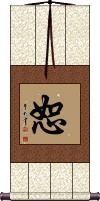
恕 means to forgive, show mercy, absolve, or excuse in Chinese and Korean Hanja (though mostly used in compound words in Korean).
恕 incorporates the pictogram of a heart at the bottom, and a woman and a mouth at the top. The heart portion has the most significance, as it is suggested that it is the heart's nature to forgive.
In Asian culture, as with most other cultures, forgiveness is an act of benevolence and altruism. In forgiving, you put yourself in someone else's shoes and show them the kindness that you would want them to show you. Confucius referred to this quality as “human-heartedness.”
Rise and Fall / Ups and Downs
Eiko-Seisui
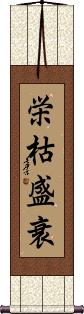
This Japanese proverb can be translated as “flourish and wither, prosper and perish,” “life is full of fortune and misfortune,” or simply “vicissitudes of life.”
栄枯盛衰 / 榮枯盛衰 is about the rise and fall of human affairs or the ups and downs of life. Prosperity comes and goes, everything is fleeting and temporary, but like waves, another swell of prosperity may come.
Here's how the Kanji break down in this proverb:
栄 = prosper; thrive; flourish; boom.
枯 = wither; die.
盛 = prosperous; flourishing; thriving; successful; energetic; vigorous; enthusiastic.
衰 = become weaker; decline; get weak; die down; subside; abate; fail.
 Notes: The original version of the first character looks like the image to the right. In modern Japan, they simplified that Kanji a bit into the version shown above. If you have a preference for which style is used for your calligraphy, please let me know when you place your order.
Apparently, with that original version of the first character, this is also used in Korean Hanja. However, I have not confirmed that
it’s
used in the same way or is widely-known in Korean.
Body and Earth in Unity
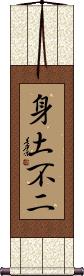
身土不二 (Shindofuni) is originally a Buddhist concept or proverb referring to the inseparability of body-mind and geographical circumstances.
This reads, “Body [and] earth [are] not two.”
Other translations or matching ideas include:
Body and land are one.
Body and earth can not be separated.
Body earth sensory curation.
You are what you eat.
Indivisibility of the body and the land (because the body is made from food and food is made from the land).
Going further, this speaks of our human bodies and the land from which we get our food being closely connected. This phrase is often used when talking about natural and organic vegetables coming directly from the farm to provide the healthiest foods in Japan.
Character notes: 身(shin) in this context does not just mean your physical body but a concept including both body and mind.
土 (do) refers to the soil, earth, clay, land, or in some cases, locality. It's not the proper name of Earth, the planet. However, it can refer to the land or realm we live in.
Japanese note: This has been used in Japan, on and off, since 1907 as a slogan for a governmental healthy eating campaign (usually pronounced as shindofuji instead of the original shindofuni in this context). It may have been hijacked from Buddhism for this propaganda purpose, but at least this is “healthy propaganda.”
Korean note: The phrase 身土不二 was in use by 1610 A.D. in Korea, where it can be found in an early medical journal.
In modern South Korea, it's written in Hangul as 신토불이. Korea used Chinese characters (same source as Japanese Kanji) as their only written standard form of the language until about a hundred years ago. Therefore, many Koreans will recognize this as a native phrase and concept.
See Also: Strength and Love in Unity
This in-stock artwork might be what you are looking for, and ships right away...

The following table may be helpful for those studying Chinese or Japanese...
| Title | Characters | Romaji (Romanized Japanese) | Various forms of Romanized Chinese | |
| Human Nature | 人性 | rén xìng / ren2 xing4 / ren xing / renxing | jen hsing / jenhsing | |
| Human Race Humanity Mankind | 人類 人类 | jinrui | rén lèi / ren2 lei4 / ren lei / renlei | jen lei / jenlei |
| The Tao or Dao of Being Human Humanity | 人道 | jindou / jindo | rén dào / ren2 dao4 / ren dao / rendao | jen tao / jentao |
| Empathy Humanity | 人情 | ninjou / ninjo | rén qíng / ren2 qing2 / ren qing / renqing | jen ch`ing / jenching / jen ching |
| Morning Dew | 朝露 | asatsuyu | zhāo lù / zhao1 lu4 / zhao lu / zhaolu | chao lu / chaolu |
| Men Die for Wealth, Birds Die for Food | 人為財死鳥為食亡 人为财死鸟为食亡 | rén wèi cái sǐ niǎo wèi shí wáng ren2 wei4 cai2 si3 niao3 wei4 shi2 wang2 ren wei cai si niao wei shi wang | jen wei ts`ai ssu niao wei shih wang jen wei tsai ssu niao wei shih wang |
|
| Life is a Dew Drop | 人生朝露 | jin sei chou ro jinseichouro jin sei cho ro | rén shēng zhāo lù ren2 sheng1 zhao1 lu4 ren sheng zhao lu renshengzhaolu | jen sheng chao lu jenshengchaolu |
| Birth Old-Age Sickness Death | 生老病死 | shou rou byou shi shouroubyoushi sho ro byo shi | shēng lǎo bìng sǐ sheng1 lao3 bing4 si3 sheng lao bing si shenglaobingsi | sheng lao ping ssu shenglaopingssu |
| Mermaid | 美人魚 美人鱼 | měi rén yú mei3 ren2 yu2 mei ren yu meirenyu | mei jen yü meijenyü |
|
| Ichigo | 一護 | ichi go / ichigo | ||
| Hitori | 人里 | hito ri / hitori | ||
| Star Man | 外星人 | wài xīng rén wai4 xing1 ren2 wai xing ren waixingren | wai hsing jen waihsingjen |
|
| Life is Short | 百歲光陰如過客 百岁光阴如过客 | bǎi suì guāng yīn rú guò kè bai3 sui4 guang1 yin1 ru2 guo4 ke4 bai sui guang yin ru guo ke baisuiguangyinruguoke | pai sui kuang yin ju kuo k`o paisuikuangyinjukuoko pai sui kuang yin ju kuo ko |
|
| Fire and Water Have No Mercy | 水火無情 水火无情 | shuǐ huǒ wú qíng shui3 huo3 wu2 qing2 shui huo wu qing shuihuowuqing | shui huo wu ch`ing shuihuowuching shui huo wu ching |
|
| Mermaid Merman | 人魚 人鱼 | nin gyo / ningyo | rén yú / ren2 yu2 / ren yu / renyu | jen yü / jenyü |
| Relax | 放鬆 放松 | fàng sōng fang4 song1 fang song fangsong | fang sung fangsung |
|
| Life is Short | 人生は短い | jinsei ha mijikai jinseihamijikai | ||
| Holy Man Saint | 聖人 圣人 | seijin | shèng rén sheng4 ren2 sheng ren shengren | sheng jen shengjen |
| Live for What You Love | 人生謳歌 | jin sei ou ka jinseiouka jin sei o ka | ||
| Life is Good | 人生良好 | jin sei ryou kou jinseiryoukou jin sei ryo ko | rén shēng liáng hǎo ren2 sheng1 liang2 hao3 ren sheng liang hao renshenglianghao | jen sheng liang hao jenshenglianghao |
| Five Precepts | 五戒 | go kai / gokai | wǔ jiè / wu3 jie4 / wu jie / wujie | wu chieh / wuchieh |
| Life in Balance Balancing Life | 平衡人生 | hei kou jin sei heikoujinsei hei ko jin sei | píng héng rén shēng ping2 heng2 ren2 sheng1 ping heng ren sheng pinghengrensheng | p`ing heng jen sheng pinghengjensheng ping heng jen sheng |
| Enjoy Life | 人生を楽しみにしている | jin sei o tano shi mi ni shi te i ru | ||
| Life is Good Life is Beautiful | 人生は素晴らしい | jinsei wa subarashii jinseiwasubarashii jinsei wa subarashi | ||
| Kansei Engineering Sense Engineering | 感性工學 感性工学 | kansei kougaku kanseikougaku kansei kogaku | gǎn xìng gōng xué gan3 xing4 gong1 xue2 gan xing gong xue ganxinggongxue | kan hsing kung hsüeh kanhsingkunghsüeh |
| Life Goes On | 人生は続く | jin sei ha tsudu ku jinseihatsuduku | ||
| Body | 身 | mi | shēn / shen1 / shen | |
| Siddhartha | 悉達多 悉达多 | shiddatta / shiddaruta | xī dá duō xi1 da2 duo1 xi da duo xidaduo | hsi ta to hsitato |
| Pain | 痛 | tsuu / ita / tsu / ita | tòng / tong4 / tong | t`ung / tung |
| The Buddha is in Each Sentient Being | 佛は衆生の中に在り | butsu wa shujou no naka ni ari butsuwashujounonakaniari butsu wa shujo no naka ni ari | ||
| Tengu | 天狗 | ten gu / tengu | tiān gǒu / tian1 gou3 / tian gou / tiangou | t`ien kou / tienkou / tien kou |
| Sword of Death | 殺人剣 杀人剣 | satsu jin ken satsujinken | ||
| Goodness Good Deed | 善 | zen | shàn / shan4 / shan | |
| Contentment | 知足 | chisoku | zhī zú / zhi1 zu2 / zhi zu / zhizu | chih tsu / chihtsu |
| Forgiveness | 恕 | shù / shu4 / shu | ||
| Rise and Fall Ups and Downs | 栄枯盛衰 / 榮枯盛衰 荣枯盛衰 | ei ko sei sui eikoseisui | ||
| Body and Earth in Unity | 身土不二 | shindofuni / shindofuji | ||
| In some entries above you will see that characters have different versions above and below a line. In these cases, the characters above the line are Traditional Chinese, while the ones below are Simplified Chinese. | ||||

Successful Chinese Character and Japanese Kanji calligraphy searches within the last few hours...



