Many custom options...


And formats...



Not what you want?
Try other similar-meaning words, fewer words, or just one word.
A Tranquil Place in Chinese / Japanese...
Buy an A Tranquil Place calligraphy wall scroll here!
Personalize your custom “A Tranquil Place” project by clicking the button next to your favorite “A Tranquil Place” title below...
Switched to secondary search mode due to lack of results using primary.
These secondary results may not be very accurate. Try a different but similar meaning word or phrase for better results. Or...
Look up A Tranquil Place in my Japanese Kanji & Chinese Character Dictionary(My dictionary is a different system then the calligraphy search you just tried)
If you want a special phrase, word, title, name, or proverb, feel free to contact me, and I will translate your custom calligraphy idea for you.
1. Adventure
2. Akiyama
3. Armor
4. Art of War: 5 Points of Analysis
6. Beijing
7. Butt
9. Caring
10. Cayman Islands
11. Corinthians 13:4
12. Every Creature Has A Domain
13. Daodejing / Tao Te Ching - Chapter 33
14. Denver
15. Dojo / Martial Arts Studio
16. Dynasty
17. Earth
18. Esprit de Corps / Determination
19. Everything Happens for a Reason
21. First Born
22. Flourish and Blossom Everywhere
23. Fong / Fang
24. Soccer / Football / Futbol
25. Forest
26. Geisha of Unequaled Talent
27. Gentleness
29. Hao
30. Here And Now
32. Holy Land
33. Home is where the heart is
35. Hotokeshima
36. Houston
37. Hua Mulan
38. Inner Peace
39. Ishida
40. Japan
41. Jikata
42. Kendo / The Way of the Sword
44. Kochi
45. Kodokan
46. Kunshi no Ken
47. Kyukodokan
48. Lai
49. Lake
52. Lima
53. Listen
54. Luohan / Lohan
55. Madonna
56. Martial Morality / Martial Arts Ethics / Virtue
57. Mercy / Compassion / Buddhist Loving Kindness
58. Mind Body Spirit
60. Mistress / Concubine / Servant
61. Moroto
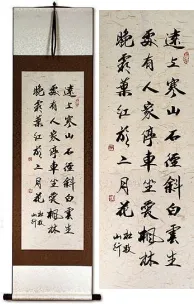
62. Mountain Travels Poem by Dumu
63. Mutual Benefit
64. My True Love
65. There’s No Place Like Home
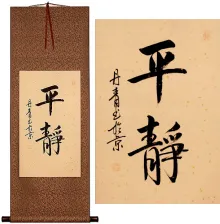
68. Peaceful / Tranquil / Calm / Free From Worry
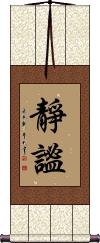
69. Peacefulness / Tranquility / Perfectly Quiet
71. Pressure Points
72. Purity
73. Quiet Warrior
74. Reach Peace and Calm Through Meditation
75. Release / Let Go
76. Rima
77. Rugby
78. The Saint
79. Samidare
80. Seikan
82. Shibata / Shida
83. Shotokai
86. A sly rabbit has three openings to its den
87. Smooth Sailing
90. Strength: Strong and Solid
92. Tibet
94. Tranquil Night
95. Tranquil / Tranquility / Serenity
96. Traveler
97. True Love
Adventure
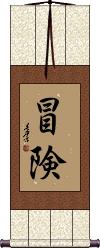
冒険 is a common Japanese way to say “Adventure.”
The first character can mean “to risk,” “to defy” or “to dare.” The second character means “inaccessible place” or “impregnable position.” Together, you get the idea of why these two characters mean adventure when put them together in Japanese.
Note: The second character is a morphed Japanese Kanji. The original Chinese version is also available and holds the same root meaning.
Akiyama
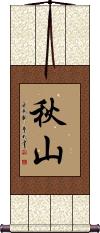
This is the surname and place name Akiyama in Japanese.
It can be read in Chinese but would be understood to be a Japanese name (no meaning in Chinese).
Armor
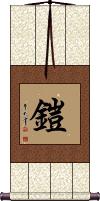
鎧 is a simple way to write armor/armour in Chinese, Japanese Kanji, and old Korean Hanja.
 This can also be Yoroi (a Japanese place name). It can also refer to mail as chain mail.
Art of War: 5 Points of Analysis
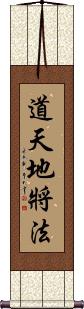
道天地將法 is a list of five key points to analyzing your situation from the first chapter of Sun Tzu's Art of War.
This reads like a 5-part military proverb. Sun Tzu says that to sharpen your skills, you must plan. To plan well, you must know your situation. Therefore, you must consider and discuss the following:
1. Philosophy and Politics: Make sure your way or your policy is agreeable among all of your troops (and the citizens of your kingdom as well). For when your soldiers believe in you and your way, they will follow you to their deaths without hesitation and will not question your orders.
2. Heaven/Sky: Consider climate / weather. This can also mean considering whether God is smiling upon you. In the modern military, this could be waiting for clear skies so that you can have air support for an amphibious landing.
3. Ground/Earth: Consider the terrain in which the battle will take place. This includes analyzing defensible positions, and exit routes, while using varying elevations to your advantage. When you plan an ambush, you must know your terrain and the best location from which to stage that ambush. This knowledge will also help you avoid being ambushed, as you will know where the likely places in which to expect an ambush from your enemy.
4. Leadership: This applies to you as the general and your lieutenants. A leader should be smart and be able to develop good strategies. Leaders should keep their word, and if they break a promise, they should punish themselves as harshly as they would punish subordinates. Leaders should be benevolent to their troops, with almost a fatherly love for them. Leaders must have the ability to make brave and fast decisions. Leaders must have steadfast principles.
5. [Military] Methods: This can also mean laws, rules, principles, models, or systems. You must have an efficient organization in place to manage both your troops and supplies. In the modern military, this would be a combination of how your unit is organized and your SOP (Standard Operating Procedure).
Notes: This is a simplistic translation and explanation. Much more is suggested in the actual text of the Art of War (Bing Fa). It would take a lot of study to master all of these aspects. In fact, these five characters can be compared to the modern military acronyms such as BAMCIS or SMEAC.
CJK notes: I have included the Japanese and Korean pronunciations but in Chinese, Korean and Japanese, this does not make a typical phrase (with subject, verb, and object) it is a list that only someone familiar with Sun Tzu’s writings would understand.
Beauty Shop / Beauty Salon
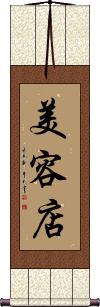
美容店 is how to write “Beauty Shop” or “Beauty Salon.”
If you own such a business, this will make a nice wall scroll to hang up - and many of your Asian customers will be able to read and appreciate it.
When traveling in China, you will see signs like this in the window of any place that offers full services of hair styling, manicures, pedicures, and often shampoo with head and back massage.
However, as a handmade wall scroll, this becomes a very fancy piece of artwork that shows the high class of your business (a great sign for your window if you don't get direct sunlight).
Beijing
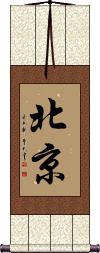
北京 is how to write Beijing, the capital of the People's Republic of China, in Chinese and Japanese.
Occasionally, you will see a romanized version, Peking or Pekin. That's the same place, just an older way to romanize the characters.
Butt
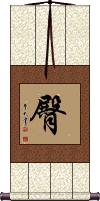
臀 is the most simple way to write butt, buttocks, behind, rump, bottom, last place, or end in Japanese, Chinese and Korean.
臀 is not appropriate for calligraphy. Also, the two-character word 屁股 or pigu, is also very common in China for butt or ass.
Canton / Guangdong
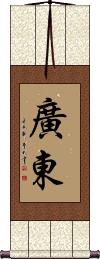
廣東 is the title of Guangdong province (Kwangtung) in south China.
In English, this place is also known as Canton, and is the root of the word Cantonese for the language, culture, and cooking style of this region.
Beyond Canton, this can be the surname Hirotou or Hiroto in Japanese though often written in the modern form of 広東 in Japan.
Caring
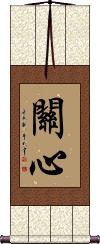
關心 means caring in Chinese.
Caring is giving love and attention to people and things that matter to you and anyone who needs help. When you care about people, you help them. You do a careful job, giving your very best effort. You treat people and things gently and respectfully. Caring makes the world a safer place.
Note: 關心 is also a word in Korean Hanja, but in Korean, it means taking interest or concern. In Korean, it's still a good word, but it doesn't quite have the “caring for a person” meaning that it does in Chinese.
See Also: Benevolence | Altruism
Cayman Islands
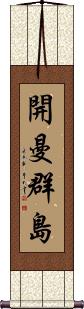
This is the Chinese name for the Cayman Islands (overseas territory of the United Kingdom and a great place to hide money).
See Also: North America | United Kingdom
Corinthians 13:4
All you need to know about LOVE
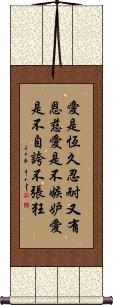
愛是恆久忍耐又有恩慈愛是不嫉妒愛是不自誇不張狂 is 1st Corinthians 13:4 in Chinese.
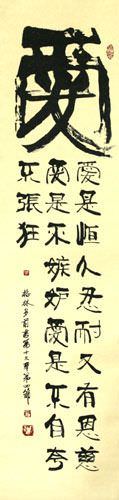
With large “love” character added.
In English, this reads:
1st Corinthians 13:4 (KJV) Charity suffereth long, and is kind; charity envieth not; charity vaunteth not itself, is not puffed up...
1st Corinthians 13:4 (NIV) Love is patient, love is kind. It does not envy, it does not boast, it is not proud.
1st Corinthians 13:4 (Basic English) Love is never tired of waiting; love is kind; love has no envy; love has no high opinion of itself, love has no pride.
The Chinese translation follows the love meaning, rather than the King James' use of “charity.” I was a little confused when writing this description with the significant differences between the NIV vs. KJV translations. After speaking to a Greek scholar about this, it would seem that the KJV has an almost errant translation with the use of “charity” in place of “love.”
We used the most popular Christian Chinese Bible, which is the Chinese Union Version (CUV). The CUV was first published in 1919. We use this so that the Chinese translation would be as accurate and standard as possible. Any Chinese Christian worth their salt will easily be able to identify this verse when they see these characters.
If you want a big “love” character written above the verse on your artwork, just make a note in the “special instructions” tab when you are customizing your artwork. There is no extra charge for that service on this special verse.
Every Creature Has A Domain
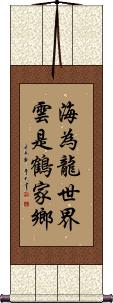
海為龍世界雲是鶴家鄉 is a somewhat poetic way to say that everyone and everything has its place in the world.
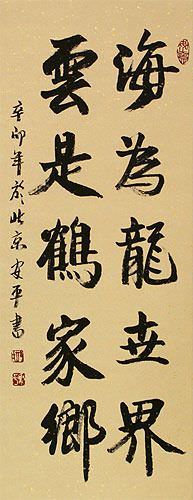 The first line (which is the column on the right) says, “The Ocean is the World of the Dragon.” The next column says, “The Clouds are the Domain of the Cranes.”
The image to the right is what this calligraphy can look like in xing-kaishu style by a Master Calligrapher.
Daodejing / Tao Te Ching - Chapter 33
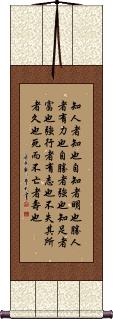
This is referred to as passage or chapter 33 of the Dao De Jing (often Romanized as “Tao Te Ching”).
These are the words of the philosopher Laozi (Lao Tzu).
To know others is wisdom;
To know oneself is acuity/intelligence.
To conquer others is power,
To conquer oneself is strength.
To know contentment is to have wealth.
To act resolutely is to have purpose.
To stay one's ground is to be enduring.
To die and yet not be forgotten is to be long-lived.
To understand others is to be knowledgeable;
To understand yourself is to be wise.
To conquer others is to have strength;
To conquer yourself is to be strong.
To know when you have enough is to be rich.
To go forward with strength is to have ambition.
To not lose your place is to be long-lasting.
To die but not be forgotten -- that's true long life.
He who is content is rich;
He who acts with persistence has will;
He who does not lose his roots will endure;
He who dies physically but preserves the Dao
will enjoy a long after-life.
Notes:
During our research, the Chinese characters shown here are probably the most accurate to the original text of Laozi. These were taken for the most part from the Mawangdui 1973 and Guodan 1993 manuscripts which pre-date other Daodejing texts by about 1000 years.
Grammar was a little different in Laozi’s time. So you should consider this to be the ancient Chinese version. Some have modernized this passage by adding, removing, or swapping articles and changing the grammar (we felt the oldest and most original version would be more desirable). You may find other versions printed in books or online - sometimes these modern texts are simply used to explain to Chinese people what the original text really means.
This language issue can be compared in English by thinking how the King James (known as the Authorized version in Great Britain) Bible from 1611 was written, and comparing it to modern English. Now imagine that the Daodejing was probably written around 403 BCE (2000 years before the King James Version of the Bible). To a Chinese person, the original Daodejing reads like text that is 3 times more detached compared to Shakespeare’s English is to our modern-day speech.
Extended notes:
While on this Biblical text comparison, it should be noted, that just like the Bible, all the original texts of the Daodejing were lost or destroyed long ago. Just as with the scripture used to create the Bible, various manuscripts exist, many with variations or copyist errors. Just as the earliest New Testament scripture (incomplete) is from 170 years after Christ, the earliest Daodejing manuscript (incomplete) is from 100-200 years after the death of Laozi.
The reason that the originals were lost probably has a lot to do with the first Qin Emperor. Upon taking power and unifying China, he ordered the burning and destruction of all books (scrolls/rolls) except those pertaining to Chinese medicine and a few other subjects. The surviving Daodejing manuscripts were either hidden on purpose or simply forgotten about. Some were not unearthed until as late as 1993.
We compared a lot of research by various archeologists and historians before deciding on this as the most accurate and correct version. But one must allow that it may not be perfect, or the actual and original as from the hand of Laozi himself.
Denver
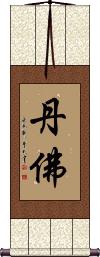
This is the place name Denver (as in Denver, Colorado), in Chinese.
Also good if your name happens to be Denver.
Denver
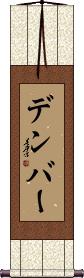
This is the place name Denver (as in Denver, Colorado), in Japanese.
Also good if your name happens to be Denver.
Note: Because this title is entirely Japanese Katakana, it should be written by a Japanese calligrapher.
Dojo / Martial Arts Studio
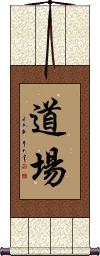
道場 is the Japanese term for a room or hall in which martial arts are taught.
道場 is often spelled “dojo” which has become a word in the English lexicon. However, the true Romaji is doujou or dōjō.
Please note: The Chinese definition of these characters is quite different. In Chinese, this is a place where Buddhist or Taoist mass is held. It could also be a place where spiritual or psychic events are performed.
Dynasty
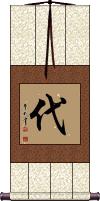
代 is the word used to designate dynasties in Asia.
代 alone can mean generation; age; period; historical era; eon; world; society; reign; era. 代 comes after the name of the dynasty, for example, the Tang Dynasty is the “Tang Dai” in Chinese.
Some have suggested that the word dynasty comes from the Chinese word “dai” (as “dai” sounds like the first syllable of a dynasty). However, the word dynasty is derived from the Greek word δυναστεία (dunasteia) meaning lordship and/or domination.
Sometimes this word is used in a different context where it can mean to represent or substitute. In this case, it can mean representative of; on behalf of; acting for, e.g. to offer incense in place of another.
In ancient Japan, this could also be a “shiro” (a unit of land area equal to one-fiftieth of a tan or about 20 square miles).
Earth
(Used in Japanese version of five elements)
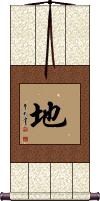
地 is the single-character element and title of the planet Earth in Chinese, old Korean Hanja, and Japanese Kanji.
Because this is a single character, the definition is a little ambiguous and can have many meanings depending on the context in which it is used. These meanings include: earth, ground, land, soil, dirt, place, territory, bottom (of a package, book, etc.), earth (one of the Japanese five elements), the region in question, the local area, skin, texture, fabric, material, weave, base, background, one's true nature, narrative (i.e. descriptive part of a story), real life, actuality, etc.
In Japanese, this Kanji can be pronounced several ways, including chi, ji, tsushi, or tsuchi.
地 is also an element of the Japanese version of the five elements (the original Chinese version uses a different version of earth).
Esprit de Corps / Determination
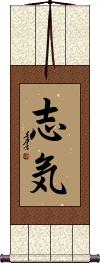
志気 is a Japanese word that can mean “esprit de corps” or “determination to achieve.”
When this is pronounced “Shige,” it can refer to a place in Japan. It can also be a Japanese surname, Shiki.
Everything Happens for a Reason
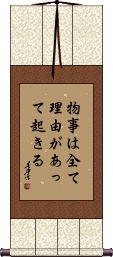
物事は全て理由があって起きる means everything happens for a reason.
However, this is a work in progress. We're still trying to decide the best way to express this in Japanese. If you order this, we might have a discussion about the best version that fits you. Here's how the characters break down by meaning (keep in mind, Japanese grammar and sentence construction is very different from English, so it doesn't make complete sense in English)...
物事 = things, everything
は particle
全て all, the whole, entirely
理由 reason
が particle
あっ be, exist, have, take place, happens
て particle
起きる to occur, to happen; to take place (usually unfavorable incidents)
Note: Because this selection contains some special Japanese Hiragana characters, it should be written by a Japanese calligrapher.
Fight / Beat Someone
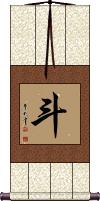
斗 is how to express the act of fighting in Chinese.
Generally, this means fighting against someone or some force whether physically or metaphorically.
Note: There is more than one way to write this character. You will notice variations on the next page after you click “Select and Customize.” If you have a preference, please let us know when you place your order.
Please note that there is a secondary pronunciation and meaning of this character. It can also mean “measuring cup” or in Japanese “sake dipper” or even “The Big Dipper.” In Japanese and Korean, this does not have the fighting meaning associated with it. You should, therefore, select this character only if your audience is Chinese, or you are a big fan of sake dippers or The Big Dipper (as that is how it will be read by Japanese and Korean people).
First Born
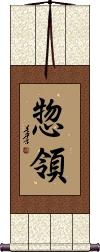
惣領 is a Japanese title for the eldest child, the oldest child, firstborn child, or child who carries on the family name.
In more ancient times, this was used to refer to the head of a warrior clan. It can also be a place name or given name “Souryou” or “Soryo” in Japanese.
Flourish and Blossom Everywhere
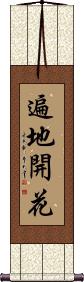
遍地開花 is a Chinese proverb that means “to blossom everywhere,” “to spring up all over the place,” or “to flourish on a large scale.”
遍地 = everywhere
開花 = opening flowers
Fong / Fang
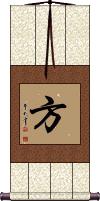
This is the most common version of a Chinese surname that romanizes as Fong from Taiwan or Fang from mainland China.
The meaning of this character is square, upright, honest, fair and square, direction, place, or side. Sometimes 方 can refer to a method, prescription, or way of doing things.
In Japanese, this can be the given names Michi, Masani, Masashi,Tamotsu, Tadashi. It can also be Japanese surnames Hon, Hou, Ho, Fuon, Pan, Ban, Tokukata, or Kata.
Soccer / Football / Futbol
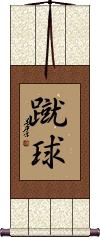
蹴球 is the title for football or soccer in Japanese Kanji and old Korean Hanja.
The sport is very popular in both Japan and Korea (Korea and Japan co-hosted the football World Cup in 2002 - a world-class sporting event held every four years that rivals the Olympics).
In Japan, they sometimes say サッカ (sakka) or フットボール (futto bouru) in place of the pronunciation shown above. 蹴球 is supposed to sound like the English word soccer and football/futbol respectively.
The first Kanji means kick and the second means ball. So technically, this means “kick ball” in Japanese and Korean (this is just an educational note - this will always be understood as the game of soccer/football).
FYI: This game would never be confused with American Football in Japan or Korea. Unlike the game of American basketball and baseball (both quite popular in Japan and Korea), there is only a vague awareness of a rugby-like game that is also called football in the USA.
Forest
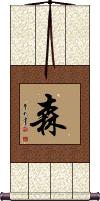
森 is the Chinese, Japanese Kanji, and old Korean Hanja for forest.
This can also refer to a dense forest-like place or thing. It can also refer to a shrine grove or sacred grove (a forest of religious significance).
Geisha of Unequaled Talent
(Danger: Can mean prostitute!)
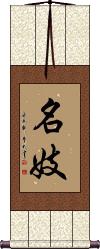
In Japanese, 名妓 means “distinguished/talented/beautiful geisha.”
The meaning in Chinese (and the deeper meaning in Japanese) would be “distinguished/talented/beautiful prostitute.”
I am not sure that our master calligrapher will even write this, so please note that fact if you decide to place the order. Of course, we'll refund your money if he refuses.
Gentleness
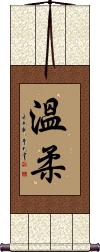
溫柔 or “gentleness” is moving wisely, touching softly, holding carefully, speaking quietly, and thinking kindly.
When you feel mad or hurt, use your self-control. Instead of harming someone, talk things out peacefully. You are making the world a safer, gentler place.
God Give Me Strength
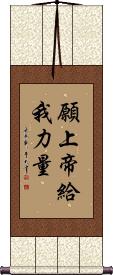
願上帝給我力量 is a wish or a prayer that you might call out at a desperate time.
Translated by us for a military serviceman in Iraq. He may need to use this phrase often, though I am not sure where he's going to find a place to hang a wall scroll.
Here And Now

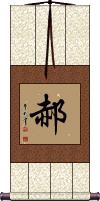
此時此地 means here and now or as things stand.
此 = This
時 = Hour
此 = This
地 = Place/Land
Hide / Shelter / Shield
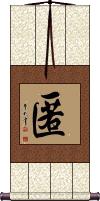
匿 means to hide, shelter, or shield.
If you imagine a safe place shielded from danger and trouble, this could be the character for you.
Holy Land
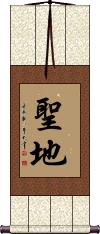
聖地 can be titled or translated in a lot of different ways: sacred ground, the Holy Land, Holy city, sacred place, Holy ground, or shrine.
I have seen all of these English translations used when coming from Chinese, Japanese, and Korean.
Home is where the heart is
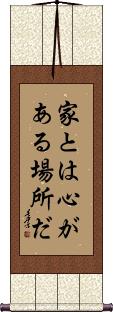
家とは心がある場所だ is, “Home is where the heart is,” in Japanese.
Most Japanese will take this to mean:
If you are with the person or at the place you love most, it becomes your true home.
Note: Because this selection contains some special Japanese Hiragana characters, it should be written by a Japanese calligrapher.
No Place Like Home
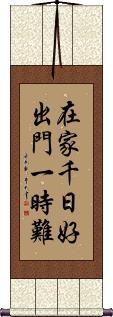
在家千日好出门一时难 is a Chinese proverb that literally means “At home, one can spend a thousand days in comfort but spending a day away from home can be challenging.”
Figuratively, this means “There's no place like home,” or roughly a Chinese version of “Home sweet home.”
Hotokeshima
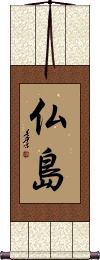
仏島 is the place name Hotokeshima (Buddha Island) which is located in Chiba, Japan.
This can also be the personal name Hotokejima.
If you wanted a more religious version, the first character should probably be 佛, making it 佛島 for a more literal or mythical island of Buddhas.
Houston
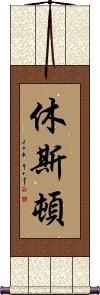
This is a common transliteration to Mandarin Chinese for the name Houston.
This is also a common way to write the place-name Houston, Texas.
Hua Mulan
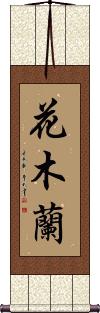
花木蘭 is the name of the famous Chinese woman warrior Hua Mulan.
She was made famous in the west by Disney's animated movie, “Mulan.”
Most of the historical information about her comes from an ancient poem. It starts with a concerned Mulan, as she is told a man from each family is to serve conscription in the army. Her father is too old, and her brother is too young. Mulan decides to take the place of her father. After twelve years of war, the army returns, and the best warriors are awarded great posts in the government and riches. Mulan turns down all offers and asks only for a good horse for the long trip home. When Mulan greets visiting comrades wearing her old clothes, they are shocked to find the warrior they rode into battle with for years is actually a woman.
Inner Peace
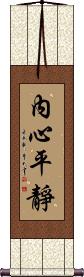
內心平靜 is a Chinese and Japanese phrase that is a direct translation of the western idea of inner peace.
The first two characters contain the idea of “heart,” “innermost being,” or “deep in the/your inner mind.”
The last two characters mean “tranquil” and “serene.”
I have seen this phrase used as “inner peace” for art prints and even on the side of coffee cups. But I think the translation is too literal. It feels like a direct translation from English rather than a nicely composed Chinese or Japanese phrase. See my other entries for “inner peace.”
See Also: Serenity | Simplicity | Peace
Ishida

石田 is the name Ishida (sometimes romanized as Ishuda), which is a Japanese surname and place name.
As a given name in Japanese, it can be Sekiden.
The meaning of this name is stone rice field.
Japan
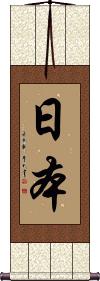
Jikata

This word has a few possible meanings.
It can refer to a room, hall, or place (a dojo or small theater). The dictionary suggests that in some context, this can refer to a special geisha who is talented in certain musical arts.
Kendo / The Way of the Sword
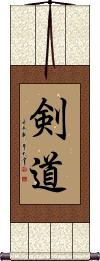
Often associated with Kenjutsu, 剱道/劍道 means “The way of the sword” in Japanese (and Korean with an alternate form of the first character).
This is also the term used for swordsmanship and even fencing in Japanese and Korean, depending on context.
Note: These same characters are also used separately in Chinese, but this exact combination yields a common title in Japanese only (perhaps someone who is really into swords would use this in China).
Note: There is more than one way to write the “sword” character (shown above is the Japanese version - if you want the Korean version, please let me know when you place your order).
Kenjutsu / Kenjitsu
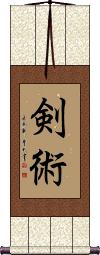
In Japanese, the modern definition, using simple terms, 剣術 is “A martial art involving swords” or “The art of the sword.”
However, in Chinese, this is the word for fencing (as in the Olympic sport).
I will suppose that you want this for the Japanese definition, which comes from skills and techniques developed in the 15th century. At that time, Kenjutsu (or swordsmanship) was a strictly military art taught to Samurai and Bushi (soldiers). The fact that swords are rarely used in military battles anymore, and with the pacification of Japan after WWII, Kenjutsu is strictly a ceremonial practice often studied as a form of martial art (more for the discipline aspect rather than practical purpose).
Language note: The Korean definition is close to the Japanese version described above. However, it should be noted that this can mean “fencing” depending on the context in Japanese, Chinese, and Korean.

 Character variation notes: There are slight variations possible with the second character. Either way is correct and understood by both Japanese and Chinese folks.
Since there are about 5 common ways to write the sword character, if you are particular about which version you want, please note that in the “special instructions” when you place your order.
Romanization note: This term is often Romanized as Kenjitsu; however, following the rules of Japanese Romaji, it should be Kenjutsu.
Kochi
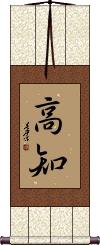
高知 is the Japanese place name, Kouchi or Kochi, a prefecture of Japan in the Shikoku region.
Often written as 高知県 (Kochiken). The added character, 県, or “ken,” just means prefecture.
Kodokan
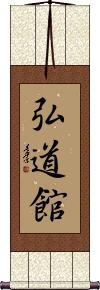
弘道館 is a Japanese title that romanizes as Kodokan.
There are a few martial arts titles that are romanized as Kodokan, so be careful to choose the correct one. This one kind of means “Great Way Hall.”
In the old Buddhist context, the 弘 Kanji can mean vast, great, to enlarge, spread abroad, or widely to proclaim.
The 道 part is the “Way,” as seen in many martial arts titles. It is the root character of Taoism/Daoism (romanized as Tao or Dao from Chinese, but Do in Japanese).
The 館 or hall part is implied to be a dojo or place of learning.
Kunshi no Ken

君子の拳 is “Kunshi no Ken” in Japanese.
The meaning is literally “Noble Fist” or “Fist of Nobility” but it's often used to describe the effort to concentrate on cultivating oneself to become a well-rounded, respectful individual.
You will see 君子の拳 sometimes written in the full Kanji form of 君子之拳. Both versions mean the same thing. If you want this more traditional Kanji version, just let me know when you place your order.
Kyukodokan
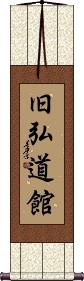
旧弘道館 is the Japanese title, Kyukodokan.
kind of means “Old Great Way Hall.” The hall part is kind of implied to be a dojo or place of learning.
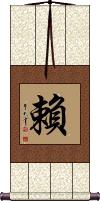
This is the surname Lai, as used in Mandarin Chinese.
The meaning is to depend on, to relay upon, to hang on in a place, to renege (on a promise), or to throw the burden on. Context really matters with these meanings, and when used as a surname, it's just a surname.
Lake
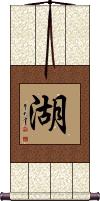
湖 means lake in Chinese, Japanese Kanji, and old Korean Hanja.
湖 is used in place names (like Lake Huron) and as a descriptive term for any large body of fresh water.
In Japanese, this can also be the female given name Reiku.
If your surname is Lake, this could be a good character for you.
Life Is But A Dream
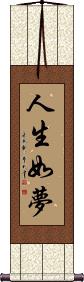
人生如夢 is an old Chinese proverb that suggests, “life is but a dream.”
This kind of follows the Buddhist idea that the world is a temporal place, where reality may not be as real as you think.
Life Of A Samurai

The 12th century phrase, 一所懸命 (Issho Kenmei) is often referred to as “Life Of A Samurai.”
Breaking it down:
一 = one
所 = place
懸 = devote
命 = life
一所懸命 literally means “to stake your life on one place.” Today, Japanese people use it to mean giving your full effort to something.
Other translations of 一所懸命 include: Very hard, with utmost effort, as hard as one can, with all one's might, for dear life, eagerly, and/or desperately.
In the context of the Samurai, it is devoting oneself to the defense of one's territory.
Originally 一生懸命 meaning “to stake your life on one birth.”
Lima
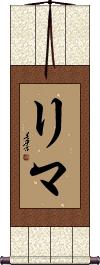
This is the Japanese Katakana for the name Lima and/or Rima.
This can also be the place name, Ar Rimah (Saudi Arabia).
Note: Because this title is entirely Japanese Katakana, it should be written by a Japanese calligrapher.
Listen
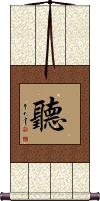
聽 means to listen, hear, and obey (depending on context).
聽 is a stand-alone word in Chinese but is usually seen in compound words in Korean. Therefore, this title is best for a Chinese audience.
 The ancient form of this character is shown in the upper left. However, there is a modern Japanese Kanji version shown to the right. If you want this modern Japanese version, please let us know when you place your order.
Luohan / Lohan
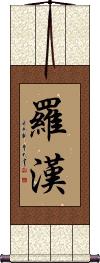
羅漢 is the title Lohan, achiever of Nirvana.
This can also be a place name and surname Rakan in Japanese.
In the Buddhist context, this can be arhan, arhat, saint, or perfect man of Hīnayāna. It can refer to the 16, 18, or 500 disciples appointed to witness Buddha's truth and save the world.
Madonna
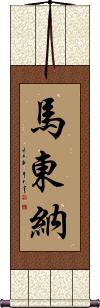
This is a common transliteration to Mandarin Chinese for the name Madonna.
This is used for the place name, Madonna, Maryland, but not for the American singer/star.
Martial Morality / Martial Arts Ethics / Virtue
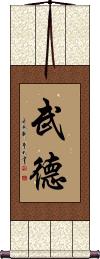
This refers to the virtue, morality, and ethics that any practitioner of martial arts should possess.
This can be used in both Chinese and Japanese in place of English terms such as “soldierly virtue,” “good conduct” (military), “warrior ethics,” and being honorable regarding any fight or competition.
In Japanese, there is a slight variation in the last character, making it 武徳 instead of 武德 in Japan. And yes, just one little horizontal stroke is omitted. If you need the Japanese version, please choose a Japanese calligrapher, or drop me a note so that I make sure you get the characters you intend.
See Also: Morality of Mind | Morality of Deed
Mercy / Compassion / Buddhist Loving Kindness
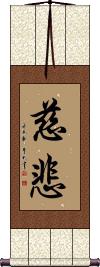
Besides the title above, 慈悲 can also be defined as clemency or lenience and sometimes the act of giving charity.
In the Buddhist context, it can be defined as “benevolence,” “loving-kindness and compassion,” or “mercy and compassion.”
This Buddhist virtue is perhaps the most important to employ in your life. All sentient beings that you encounter should be given your loving kindness. And trust me, however much you can give, it comes back. Make your life and the world a better place!
This Chinese/Japanese Buddhist term is the equivalent of Metta Karuna from Pali or Maitri Karuna from Sanskrit.
慈 can mean loving-kindness by itself.
悲 adds a component of sorrow, empathy, compassion, and sympathy for others.
See Also: Benevolence
Mind Body Spirit
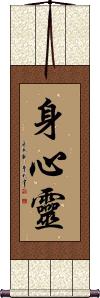
身心靈 is probably the best way to express the idea of “Body, Mind, and Spirit” in Chinese and old Korean Hanja. We are actually using the word “heart” here because, for thousands of years, the heart was thought to be the place where your thoughts, feelings, and emotions came from. We do something similar in the west when we say “warm-hearted” or “I love you with all of my heart.” In this context, heart = mind in Asian language and culture.
The very literal translation of these three characters is “body, heart & spirit,” which could also be interpreted as “body, mind & soul.”
We have arranged these characters in this order because it simply “feels” like the proper order in the Chinese language. Word lists like this are not so common for calligraphy artwork, so we must be careful to put them in the most natural order. It should be noted that this is not a common title in Asia, nor is it considered an actual phrase (as it lacks a clear subject, verb, and object).
 In Japanese Kanji, they use an alternate form of the character for soul or spirit. If you want this using the Japanese alternate, please click on the Kanji shown to the right instead of the button above.
Japanese disclaimer: This is not a natural phrase/list in Japanese. While not totally-natural in Chinese, this word list is best if your audience is Chinese.
Missing / Yearning
I miss you
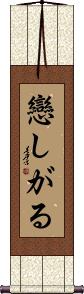
戀しがる is the most common Japanese verb for missing someone or yearning for someone (it could also be missing a place).
戀しがる is the shortest way to say, “I miss you” or “I yearn for you” in Japanese.
Breaking down the characters:
恋し (koishi) yearned for; longed for; missed (acts as an adjective in Japanese).
がる (garu) to feel, behavior (this represents emotion and turns the whole word into a verb in Japanese).
Note: Because this selection contains some special Japanese Hiragana characters, it should be written by a Japanese calligrapher.
Mistress / Concubine / Servant
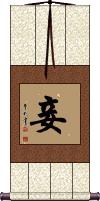
妾 is the most simple way to say concubine or mistress in Chinese, Japanese Kanji, and old Korean Hanja.
Sometimes this can mean servant. Occasionally, a woman may use this title in place of “I” or “me” to say “your humble servant” in a self-deprecating way.
Moroto
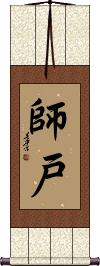
This is a Japanese surname that romanizes as Moroto.
This is also a place name in Japan.
There are a few other Japanese surnames that have the same romanization, so be sure this is the right one before you order.
Mountain Travels Poem by Dumu

This poem was written almost 1200 years ago during the Tang dynasty.
It depicts traveling up a place known as Cold Mountain, where some hearty people have built their homes. The traveler is overwhelmed by the beauty of the turning leaves of the maple forest that surrounds him just as night overtakes the day, and darkness prevails. His heart implores him to stop, and take in all of the beauty around him.
First, before you get to the full translation, I must tell you that Chinese poetry is a lot different than what we have in the west. Chinese words simply don't rhyme in the same way that English or other western languages do. Chinese poetry depends on rhythm and a certain beat of repeated numbers of characters.
I have done my best to translate this poem keeping a certain feel of the original poet. But some of the original beauty of the poem in its original Chinese will be lost in translation.
Far away on Cold Mountain, a stone path leads upwards.
Among white clouds, people's homes reside.
Stopping my carriage I must, as to admire the maple forest at nights fall.
In awe of autumn leaves showing more red than even flowers of early spring.
Hopefully, this poem will remind you to stop, and “take it all in” as you travel through life.
The poet's name is “Du Mu” in Chinese that is: 
 .
.
The title of the poem, “Mountain Travels” is: 

You can have the title, poet's name, and even “Tang Dynasty” written as an inscription on your custom wall scroll if you like.
More about the poet:
Dumu lived from 803-852 AD and was a leading Chinese poet during the later part of the Tang dynasty.
He was born in Chang'an, a city in central China and the former capital of the ancient Chinese empire in 221-206 BC. In present-day China, his birthplace is currently known as Xi'an, the home of the Terracotta Soldiers.
He was awarded his Jinshi degree (an exam administered by the emperor's court which leads to becoming an official of the court) at the age of 25 and went on to hold many official positions over the years. However, he never achieved a high rank, apparently because of some disputes between various factions, and his family's criticism of the government. His last post in the court was his appointment to the office of Secretariat Drafter.
During his life, he wrote scores of narrative poems, as well as a commentary on the Art of War and many letters of advice to high officials.
His poems were often very realistic and often depicted everyday life. He wrote poems about everything, from drinking beer in a tavern to weepy poems about lost love.
The thing that strikes you most is the fact even after 1200 years, not much has changed about the beauty of nature, toils, and troubles of love and beer drinking.
Mutual Benefit
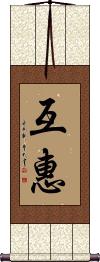
This word means mutual benefit or mutually beneficial in Chinese, Japanese Kanji, and old Korean Hanja.
This can also be defined as reciprocity or reciprocal.
Note: In Japanese, they will tend to drop one stroke on the second character and write 互恵 instead of 互惠. If this small variation matters to you, please drop me a note when you place your order.
My True Love
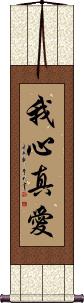
我心真愛 is a slightly poetic way to express this sentiment to someone.
The meaning is “My True Love,” but the characters directly translate as “I/Me/My Heart/Mind True/Real Love.”
Note that Chinese grammar and construction are different, so this sounds very eloquent and artsy in Chinese.
In Korean Hanja, the third character should be written differently. Just let me know when you place your order if you want that version - it will still make sense in Chinese. This phrase makes sense in Korean but is not commonly used.
There’s No Place Like Home
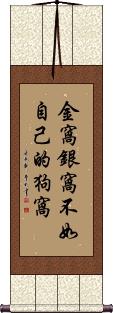
金窝银窝不如自己的狗窝 is a Chinese slang proverb that means “Golden house, [or a] silver house, not as good as my own dog house.”
It's basically saying that even a house made of gold or silver is not as good as my own home (which may only be suitable for a dog but at least it's mine).
No Place Like Home
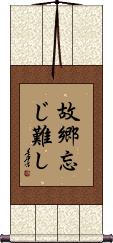
故郷忘じ難し is a Japanese proverb that means “there is no place like home” or “home is sweet to an exile.”
Note: Because this selection contains some special Japanese Hiragana characters, it should be written by a Japanese calligrapher.
Northern Praying Mantis
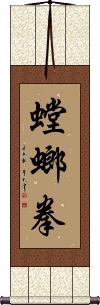
This can be translated literally as “Praying Mantis Fist.”
螳螂拳 is sometimes called Shandong Praying Mantis after its place of origin. It was created by Wang Lang and was named after the praying mantis, an insect, the aggressiveness of which inspired the style.
Shaolin records document that Wang Lang was one of the 18 masters gathered by the Shaolin Abbot Fu Ju, which dates him and Northern Praying Mantis style to the Song Dynasty (960-1279 A.D.).
The fact that the word “Northern” is used in the English title has more to do with where this style came from (Shandong is in northern China), but “north” is absent from this Chinese title.
Note: 螳螂拳 is also a title in Japanese - however, only a Japanese person who practices or is familiar with the “Praying Mantis Fist” style would recognize it.
Peaceful / Tranquil / Calm / Free From Worry
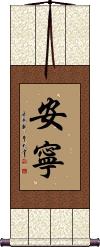
This is a nice word that means peaceful, tranquil, calm, composed, “free from worry,” “public peace,” tranquility, good health, well-being, or welfare in Chinese and Korean.
Note: The definition in Japanese is not so broad but still means peaceful or “public peace.”
Peacefulness / Tranquility / Perfectly Quiet
Pillars of Marriage
Respect / Loyalty / Honesty
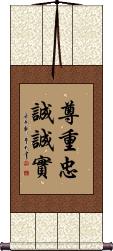
尊重忠誠誠實 is a “word list” consisting of “Respect/Loyalty/Honesty.”
Word lists are not as common in Chinese as they are in English but leaving that concern behind, this has a good meaning.
If you want to customize it more, add an inscription with your wedding date or names (just a small extra fee for translation).
Note: Because these are three separate words, the calligrapher may be inclined to leave a small space between each two-character word. Let us know if you have any preference when you place your order.
Pressure Points
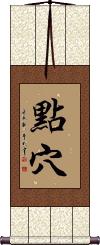
點穴 means pressure points in Chinese and Japanese.
In martial arts, this term refers to hitting a pressure point or vulnerable body cavity. 點穴 is not the term “dim mak,” but it is often used in place of or with dim mak.
In medical terms, these are just pressure points, which can be places for acupuncture or the application of moxibustion.
See Also: Dim Mak
Purity
Clean and Pure
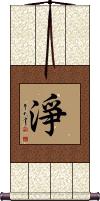
淨 is the most simple way to express purity or cleanliness in Chinese, Japanese Kanji, and old Korean Hanja.
As a single character, the concept is broad: This can be a verb (the act of cleaning, purifying, or cleansing) but it can also be the state of being clean, pure, and chaste. In some contexts, it can be a place to clean (like a bathing room for the soul in a Buddhist context). In Japanese, this can be a female given name “Jou” or “jō” (the Japanese equivalent of the English girl's name “Chastity”).
Quiet Warrior
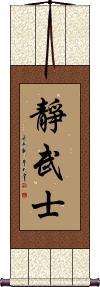
靜武士 is the shortest way to write “Quiet Warrior” or “Tranquil Warrior” in Chinese.
See Also: Peaceful Warrior
Quiet Warrior
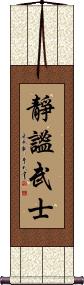
靜謐武士 means “Quiet Warrior” in Chinese.
靜謐 means quiet or tranquil.
武士 means warrior or soldier.
See Also: Peaceful Warrior
Reach Peace and Calm Through Meditation
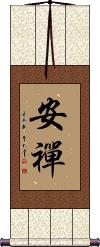
安禪 creates a title that means to reach peace and calm through meditation.
安禪 is an excellent wall scroll for your relaxation or meditation room.
This is also a Buddhist-related term that encompasses the idea of entering into dhyana meditation.
This is also used in Japanese, but in modern times, the second character has changed, so it's 安禅 now. If you want the modern Japanese version, just choose a Japanese calligrapher, and let me know when you place your order.
Release / Let Go
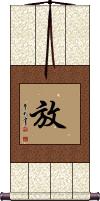
放 means to release, to free, to let go, to let out, to set off (fireworks).
In Japanese, this can also be a place called Hanashi
放 is also used in the context of Buddhism.
In Buddhism, this can represent the release of desire, materialism, suffering, or mortality.
Rima
This is the Japanese Katakana for the name Lima and/or Rima.
This can also be the place name, Ar Rimah (Saudi Arabia).
Note: Because this title is entirely Japanese Katakana, it should be written by a Japanese calligrapher.
Rugby
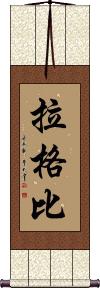
拉格比 is the Chinese word for Rugby.
This title usually refers to the game or sport of Rugby. But can also refer to the place name or school in England of the same name.
Rugby
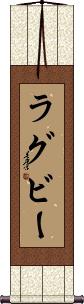
ラグビー is the Japanese Katakana word for Rugby.
This is usually the sport of Rugby but is sometimes used for the place name Rugby or Wragby Britain.
Note: Because this title is entirely Japanese Katakana, it should be written by a Japanese calligrapher.
The Saint
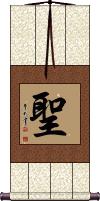
聖 is the simple, single-character religious form of “saint” in Chinese (also holds the same meaning in Japanese and Korean, though rarely used alone like this).
This can also mean holy, sage, master, or priest.
Note: 聖 is often used in compound words (words of more than one character) to create further meanings. In compounds, it can mean holy, sacred, or divine.
聖 is also used as the first word for Spanish and English place names such as “San Diego” and “St. Louis” in Chinese (not Japanese).
In the Buddhist context, this can represent ārya or sādhu. And mean a sage; wise and good; upright, or correct in all his character; sacred, holy, or saintly.
Samidare
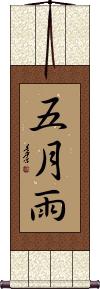
This is the Japanese name Samidare.
The meaning of the name is “early-summer rain.” Literally, it's “5th moon rain,” which means “rain in the month of May.” This may refer to an anime character, a Japanese battleship in WWII, or a place in Japan called Samidare.
Seikan
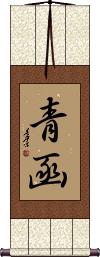
This is the Japanese place name, Seikan.
This place particularly famous for the engineering feat of the submarine Seikan Tunnel.
Note: There are other words and names in Japanese that romanize as Seikan. Make sure this is the right one before you order.
Serenity / Tranquility
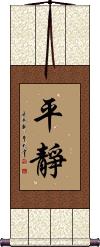
Shibata / Shida
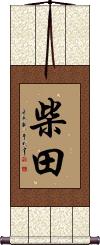
This is a Japanese surname and place-name that can be romanized as Shibata or Shida.
Other variations of romanization include: Tsubata; Shibada; Shihada; Shinoda.
This is understood to be a Japanese place-name/surname in Chinese.
Shotokai
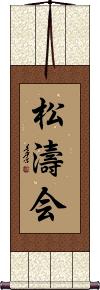
松濤会 is the martial arts style Shotokai or Shōtōkai in Japanese Kanji.
Sometimes written in the old form, 松濤會 or even 鬆濤會. Let me know if you want one of these versions instead of 松濤会 when you place your order.
Silent / Solitary
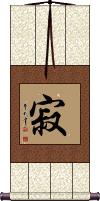
寂 means silent, solitary, quiet, calm, still, rest, or tranquil.
This also has a strong association with Buddhism where it can mean “entering into Nirvana.” In that context, this is sometimes used to refer to the passing of a Buddhist monk (he is silent, as he has entered Nirvana). For the living, this is about tranquility (especially of mind).
Some will also use this to mean “elegant simplicity.”
From Sanskrit, this can represent praśama, vivikta, śānti, or nibbāna (nirvāṇa).
Sit Quietly in Meditation
A state of mind
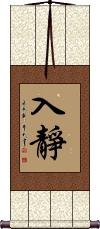
入靜 is used in Taoism and Qi Gong to describe the state you can reach while sitting quietly in meditation. It contains the idea of achieving a highly-tranquil and peaceful state. Some may describe this state as “sleeping while still awake.”
If you have a relaxation or meditation room, this is the calming wall scroll that you would want hanging in that room.
A sly rabbit has three openings to its den
-or- The crafty rabbit has three different entrances to its lair
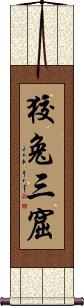
狡兔三窟 speaks to the cunning character of a sly rabbit. Such a rabbit will not have just one hole but rather a few entrances and exits from his liar.
About 2,250 years ago, a rich man told his assistant to go and buy something wonderful that he did not yet possess. He was a man that already had everything, so the assistant went to a local village that owed a great deal of money to the rich man. The assistant told the village elders that all debts were forgiven. All the villagers rejoiced and praised the rich man's name. The assistant returned to the rich man and told him he had purchased “benevolence” for him. The rich man was mildly amused but perhaps slightly confused by the action.
Sometime later, the rich man fell from the favor of the Emperor and was wiped out without a penny to his name. One day he was walking aimlessly and stumbled into the village where the debts had been forgiven. The villagers recognized the man and welcomed him with open arms, clothed, fed him, and gave him a place to live.
Without trying, the man had become like the sly and cunning rabbit. When his exit was blocked, he had another hole to emerge from - and was reborn. This story and idiom come from a book titled “The Amendment” - it's unclear whether this man actually existed or not. But the book did propel this idiom into common use in China.
Still today, this idiom about the rabbit is used in China when suggesting “backup plans,” alternate methods, and anyone with a good escape plan.
Smooth Sailing
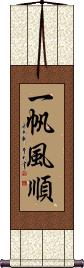
一帆風順 is just what you think it means. It suggests that you are on a trouble-free voyage through life, or literally on a sailing ship or sailboat. It is often used in China as a wish for good luck on a voyage or as you set out on a new quest or career in your life. Some may use this in place of “bon voyage.”
The literal meaning is “Once you raise your sail, you will get the wind you need, and it will take you where you want to go.” Another way to translate it is “Your sail and the wind follow your will.”
This is a great gift for a mariner, sailor, adventurer, or someone starting a new career.
Note: Can be understood in Korean Hanja but is rarely used.
See Also: Bon Voyage | Adventure | Travel
Soldier / Private
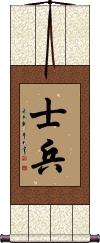
士兵 means “Soldier” but more specifically, a rank-and-file soldier (a private or troop - you could say a ground-pounder). Our other entry for “solider / serviceman” is probably better for a wall scroll (since someday, you will be promoted).
Note: In Japanese, they use these characters in the opposite order to create the same meaning word. In that order, it's pronounced “heishi” in Japanese. Just let us know if you want it in Japanese Kanji order when you place your order.
Songahm Taekwondo
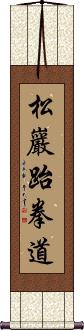
松巖跆拳道 is the title Songahm Taekwondo.
If you want this written in Korean Hangul instead of Hanja, click on the Hangul characters below the Korean flag above.
Note, Songahm is usually written in Hanja as 松巖. However, in Traditional Chinese, it would be 鬆巖, and in modern Japanese, it can be 松岩 (but not known in this context - I think it's a small train station and place in Japan).
Technically, all of these can also be Korean Hanja so that you might see these variations in use. If you need a version other than 松巖, just let me know when you order.
Strength: Strong and Solid
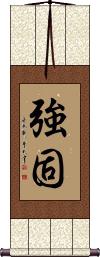
強固 means firmness, stability, security, and strength in Japanese.
It's not used commonly in China, but it means “powerful,” “firm,” “solid,” “strong,” or “better than others” in Chinese. There is a slight variation in the top of the first character between Chinese and Japanese. Because this is more of a Japanese word, we are showing the Japanese form here.
強固 is also a Korean word, but Korean Hanja uses the Chinese form of the first character (one tiny stroke is a little different), so just let me know if your audience is Korean when you place your order, and we'll have it written in the Chinese/Korean version.
Therapeutic Massage
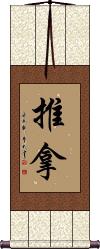
推拿 is “Tui Na,” a Chinese version of therapeutic massage.
The title suggests a pushing and pulling motion.
In reality, this is the most legitimate form of massage in China. Seeing this on a sign in front of a building tells you it's a place for health improvement via massage. No mistaking this for any illicit version of massage.
Tibet
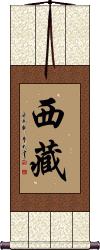
西藏 is the Chinese and Japanese name for Tibet.
It is a vast area in southwest China for which the Chinese government has little control (except in the capital of Llasa). During your travels in Tibet (outside of Llasa) you will find it is rough country full of ruthless bandits and honorable and upright Living Buddhas. There are about 2000 Living Buddhas in Tibet, and at least 10 times more bandits ready to ambush you on the road or trail.
On the eastern frontier of Tibet, you will find the place designated to be Shangri-la. It's a friendly village of Tibetans and is the gateway to greater Tibet.
The full official Chinese name is Tibet Autonomous Region or 西藏自治區|西藏自治区. The name here, 西藏 is quite old - from several dynasties ago.
Tranquil Midnight
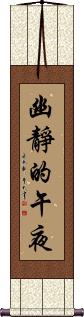
幽靜的午夜 is a way to express the emotions that you might feel at midnight.
Beyond peaceful, quiet, or tranquil, there is an idea of being remote or lonesome, buried in the meaning of the first two characters.
Tranquil Midnight
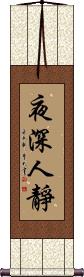
夜深人靜 literally means “Night Deep/Dark People Quiet/Tranquil.”
In more natural English, some translate this as “late night, all is quiet,” “tranquil midnight,” or “in the dead of night” (implying the dead quiet of midnight).
Tranquil Night
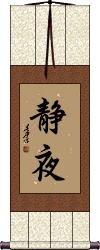
静夜 is a Japanese word meaning “quiet night” or “tranquil night.” It implies late night, such as midnight.
静夜 is also a female given name in Japanese, Seiya.
Tranquil / Tranquility / Serenity
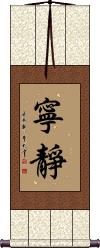
寧靜 expresses the idea of tranquility and serenity in Chinese.
See Also: Peace | Inner Peace | Harmony | Calm
Traveler
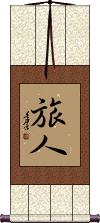
旅人 is a Japanese title for traveller/traveler, wayfarer, nomad, a person who goes from place to place, pilgrim, etc.
True Love
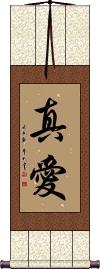
真愛 is literally “True Love” in Chinese.
The first character means “real,” “true,” and “genuine.” The second character means “love” and “affection.”
During the customization of your calligraphy wall scroll, there is a place to add an inscription. You might want that inscription to be your names in Chinese down the side of your wall scroll or perhaps just below these two main characters (just $9 extra). A nice gift to celebrate an anniversary or marriage!
This in-stock artwork might be what you are looking for, and ships right away...
Gallery Price: $79.00
Your Price: $43.88

Gallery Price: $178.00
Your Price: $98.88
Gallery Price: $400.00
Your Price: $138.88
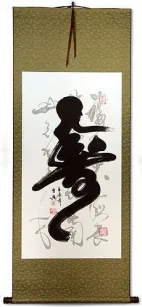
Longevity / Long Life Unique Calligraphy Scroll
Discounted Blemished
Gallery Price: $47.00
Your Price: $26.00
Gallery Price: $160.00
Your Price: $88.77


Gallery Price: $232.00
Your Price: $128.88

Gallery Price: $60.00
Your Price: $36.88
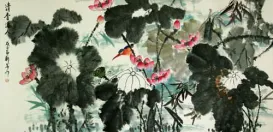
Gallery Price: $340.00
Your Price: $188.88


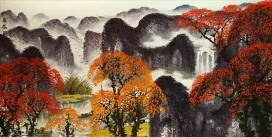
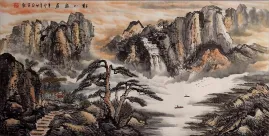
Gallery Price: $400.00
Your Price: $188.88


Successful Chinese Character and Japanese Kanji calligraphy searches within the last few hours...



