Many custom options...


And formats...



Strength Ability in Chinese / Japanese...
Buy a Strength Ability calligraphy wall scroll here!
Personalize your custom “Strength Ability” project by clicking the button next to your favorite “Strength Ability” title below...
Strength / Ability
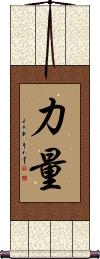
力量 is a general strength term.
It can refer to mental or physical strength (depending on context). 力量 can also be used to describe strength in terms of capability, capacity, ability, and even tact. Some may translate this as power or force.
Spiritual Strength / Strength of Spirit
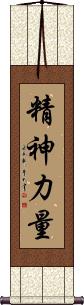
精神力量 is a title that speaks of one's soul or spirit and the capacity or strength that soul possesses.
The first two characters mean mind, heart, spirit, and/or soul.
The last two characters mean strength, capacity, or ability.
Note: Separately, these are two words in Japanese and can be pronounced, but this does not make a natural title in Japanese (best if your audience is Chinese).
Power / Strength
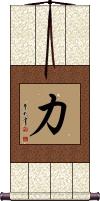
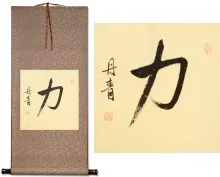
力 is the simplest form of “power” or “strength.”
In Japanese, it is pronounced “chikara” when used alone, and “ryoku” when used in a sentence (there are also a few other possible pronunciations of this Kanji in Japanese).
In some contexts, this can mean ability, force, physical strength, capability, and influence.
Strong / Powerful / Force
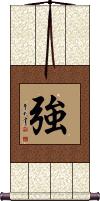
強 is a character that means strong, strength, force, powerful, better, stubborn, and stiff (yes, all of this in one character).
This “strong” has less to do with physical strength and more to do with having a winning attitude, or just having the ability to win at something.
Note that most of the time, this character is pronounced “qiang” but when used with the meaning of stubborn, unyielding, or stiff, it is pronounced “jiang” in Chinese.
Also, sometimes “qiang” is used in modern Chinese to describe people that do crazy things (For example: Bicycling from Beijing to Tibet alone). I sometimes can be found outside my Beijing apartment wearing nothing but shorts and a tee-shirt while eating ice cream during a snow storm, just to hear my neighbors call me “qiang.” Maybe they mean “strong” but perhaps they are using the new meaning of “crazy strong.”
強 can also be a Chinese surname that romanizes as Jiang in the mainland or Chiang if from Taiwan.
強 is a valid Korean Hanja character with the same meaning but is mostly used in compound Korean words.
強 is used in Japanese (though normally in compound words). In Japanese, it has the same meaning but in some contexts can mean “a little more than...” or “a little over [some amount].” Most Japanese would read this as tough, strength, stiff, hard, inflexible, obstinate, or stubborn.
The variant 彊 is sometimes seen in older literature.
Imagination
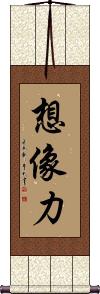
想像力 is probably the best way to express “imagination” in Chinese, Japanese Kanji, and old Korean Hanja.
It literally means “your strength to imagine.” The last character means strength or ability, while the first two mean imagine or conceptualize. My Japanese dictionary defines this as “The power of imagination.” While my Korean dictionary says, “imaginative power.”
This in-stock artwork might be what you are looking for, and ships right away...
Gallery Price: $65.00
Your Price: $39.77

Gallery Price: $222.00
Your Price: $122.88

Gallery Price: $60.00
Your Price: $36.88

Gallery Price: $31.00
Your Price: $16.88

Gallery Price: $200.00
Your Price: $122.88
Gallery Price: $108.00
Your Price: $59.88
Gallery Price: $106.00
Your Price: $58.88
Gallery Price: $90.00
Your Price: $49.88
Gallery Price: $72.00
Your Price: $39.88

Gallery Price: $40.00
Your Price: $16.88

Gallery Price: $240.00
Your Price: $148.88
Not the results for Strength Ability that you were looking for?
Below are some entries from our dictionary that may match your Strength Ability search...
| Characters If shown, 2nd row is Simp. Chinese |
Pronunciation Romanization |
Simple Dictionary Definition |
力 see styles |
lì li4 li riki りき |
More info & calligraphy: Power / Strength(suffix) strength; power; proficiency; ability; (given name) Riki bala; power, strength, of which there are several categories: 二力 power of choice and of practice; 三力 the power of Buddha; of meditation (samādhi) and of practice. 五力 pañcabala, the five powers of faith, zeal, memory (or remembering), meditation, and wisdom. 六力 A child's power is in crying; a woman's in resentment; a king's in domineering; an arhat's in zeal (or progress); a Buddha's in mercy; and a bhikṣu's in endurance (of despite) . 十力 q.v. The ten powers of Buddhas and bodhisattvas. |
力量 see styles |
lì liang li4 liang5 li liang rikiryou / rikiryo りきりょう |
More info & calligraphy: Strength / Ability(1) ability; capacity; capability; talent; (2) physical strength |
精 see styles |
jīng jing1 ching makoto まこと |
essence; extract; vitality; energy; semen; sperm; mythical goblin spirit; highly perfected; elite; the pick of something; proficient (refined ability); extremely (fine); selected rice (archaic) (1) spirit; sprite; nymph; (2) energy; vigor (vigour); strength; (3) fine details; (4) (See 精液) semen; (given name) Makoto Cleaned rice, freed from the husk, pure; essential, essence, germinating principle, spirit; fine, best, finest. |
腕 see styles |
wàn wan4 wan ude うで |
wrist; (squid, starfish etc) arm (1) arm; (2) ability; skill; talent; competence; (3) (physical) strength; (place-name) Ude [upper] arm |
力倆 see styles |
rikiryou / rikiryo りきりょう |
(out-dated kanji) (1) ability; capacity; capability; talent; (2) physical strength |
実力 see styles |
jitsuryoku じつりょく |
(1) (real) ability; true strength; merit; efficiency; competency; (2) (See 実力行使) arms; force |
戦力 see styles |
senryoku せんりょく |
(1) war potential; military strength; fighting power; (2) ability (to compete); capabilities; valuable asset |
特長 特长 see styles |
tè cháng te4 chang2 t`e ch`ang te chang tokuchou / tokucho とくちょう |
personal strength; one's special ability or strong points strong point; forte; merit; strength |
眼力 see styles |
yǎn lì yan3 li4 yen li ganriki; ganryoku がんりき; がんりょく |
eyesight; strength of vision; the ability to make discerning judgments insight; power of observation insight |
筆力 笔力 see styles |
bǐ lì bi3 li4 pi li hitsuryoku ひつりょく |
vigor of strokes in calligraphy or drawing; vigor of style in literary composition strength of the brush stroke; power of the pen; ability to write |
脚力 see styles |
kyakuryoku; kyakuriki きゃくりょく; きゃくりき |
leg strength; walking ability; running ability |
任せる see styles |
makaseru まかせる |
(transitive verb) (1) to entrust (e.g. a task) to another; to leave to; (2) to passively leave to someone else's facilities; (3) to leave to take its natural course; (4) to continue (something) in a natural fashion (without particular aim); (5) to rely fully on one's (full strength, great ability, long time taken) to get something done |
力試し see styles |
chikaradameshi ちからだめし |
test of one's strength; test of one's ability |
委せる see styles |
makaseru まかせる |
(out-dated kanji) (transitive verb) (1) to entrust (e.g. a task) to another; to leave to; (2) to passively leave to someone else's facilities; (3) to leave to take its natural course; (4) to continue (something) in a natural fashion (without particular aim); (5) to rely fully on one's (full strength, great ability, long time taken) to get something done |
段違い see styles |
danchigai だんちがい |
(adj-no,adj-na,n) (1) wildly different (in ability, strength, etc.); on another level; in a different league; a world apart; far better; (adj-no,n) (2) of different heights; uneven |
科学力 see styles |
kagakuryoku かがくりょく |
scientific capability; scientific ability (e.g. of a student); scientific strength (e.g. of a country); level of technological development |
防御力 see styles |
bougyoryoku / bogyoryoku ぼうぎょりょく |
defensive strength; defensive ability |
力が付く see styles |
chikaragatsuku ちからがつく |
(exp,v5k) (See 付く・つく・4) to gain strength; to increase ability |
無力無能 无力无能 see styles |
wú lì wú néng wu2 li4 wu2 neng2 wu li wu neng muriki munō |
having neither strength nor ability |
隨能隨力 随能随力 see styles |
suí néng suí lì sui2 neng2 sui2 li4 sui neng sui li zuinō zuiriki |
according to one's ability and strength |
全力を上げる see styles |
zenryokuoageru ぜんりょくをあげる |
(exp,v1) to use all one's strength (ability) |
全力を挙げる see styles |
zenryokuoageru ぜんりょくをあげる |
(exp,v1) to use all one's strength (ability) |
Variations: |
tsuku つく |
(v5k,vi) (1) to be attached; to be connected with; to adhere; to stick; to cling; (v5k,vi) (2) to remain imprinted; to scar; to stain; to dye; (v5k,vi) (3) to bear (fruit, interest, etc.); (v5k,vi) (4) to be acquired (of a habit, ability, etc.); to increase (of strength, etc.); (v5k,vi) (5) to take root; (v5k,vi) (6) to accompany; to attend; to follow; to study with; (v5k,vi) (7) to side with; to belong to; (v5k,vi) (8) (See 憑く) to possess; to haunt; (v5k,vi) (9) (See 点く・1) to be lit; to catch fire; to ignite; to be turned on (of a light, appliance, etc.); (v5k,vi) (10) to be settled; to be resolved; to be decided; (v5k,vi) (11) to be given (of a name, price, etc.); (v5k,vi) (12) to be sensed; to be perceived; (v5k,vi) (13) (from 運がつく) to be lucky; (suf,v5k) (14) (after -masu stems, onomatopoeic and mimetic words) (See 付く・づく) to become (a state, condition, etc.) |
Variations: |
rikiryou / rikiryo りきりょう |
(1) ability; capacity; capability; talent; (2) physical strength |
Variations: |
omoikiri おもいきり |
(adverb) (1) (See 思いっきり・1) to one's heart's content; as much as one wants; as hard as one can; with all one's strength; to the best of one's ability; to the utmost; with determination; hard; heavily; (2) resolution; decisiveness; determination; resignation |
Variations: |
zenryokuoageru ぜんりょくをあげる |
(exp,v1) to use all one's strength (ability) |
Variations: |
makaseru まかせる |
(transitive verb) (1) to entrust (e.g. a task) to another; to leave to; (transitive verb) (2) (See 想像に任せる) to passively leave to someone else's facilities; (transitive verb) (3) (See 成り行きに任せる) to leave to take its natural course; (transitive verb) (4) to continue (something) in a natural fashion (without particular aim); (transitive verb) (5) (See 力任せ) to rely fully on one's (full strength, great ability, long time taken) to get something done |
Variations: |
omoikkiri おもいっきり |
(adverb) (1) (See 思い切り・1) to one's heart's content; as much as one wants; as hard as one can; with all one's strength; to the best of one's ability; to the utmost; with determination; hard; heavily; (2) (See 思い切り・2) resolution; decisiveness; determination; resignation |
Variations: |
omoikkiri おもいっきり |
(adverb) (1) (See 思い切り・1) to one's heart's content; as much as one wants; as hard as one can; with all one's strength; to the best of one's ability; to the utmost; with determination; hard; heavily; (2) (See 思い切り・2) resolution; decisiveness; determination; resignation |
Variations: |
kuraberu くらべる |
(transitive verb) (1) to compare; to make a comparison (between); (transitive verb) (2) (occ. written as 競べる) to compete (on); to measure (one's strength, ability, etc. against another's) |
Click here for more Strength Ability results from our dictionary
The following table may be helpful for those studying Chinese or Japanese...
| Title | Characters | Romaji (Romanized Japanese) | Various forms of Romanized Chinese | |
| Strength Ability | 力量 | riki ryou / rikiryou / riki ryo | lì liàng / li4 liang4 / li liang / liliang | |
| Spiritual Strength Strength of Spirit | 精神力量 | seishin rikiryou seishinrikiryou seishin rikiryo | jīng shén lì liàng jing1 shen2 li4 liang4 jing shen li liang jingshenliliang | ching shen li liang chingshenliliang |
| Power Strength | 力 | chikara / ryoku | lì / li4 / li | |
| Strong Powerful Force | 強 强 | kyou / kyo | qiáng / qiang2 / qiang | ch`iang / chiang |
| Imagination | 想像力 | souzouryoku sozoryoku | xiǎng xiàng lì xiang3 xiang4 li4 xiang xiang li xiangxiangli | hsiang hsiang li hsianghsiangli |
| In some entries above you will see that characters have different versions above and below a line. In these cases, the characters above the line are Traditional Chinese, while the ones below are Simplified Chinese. | ||||

Successful Chinese Character and Japanese Kanji calligraphy searches within the last few hours...



