Many custom options...


And formats...



Soul Spirit in Chinese / Japanese...
Buy a Soul Spirit calligraphy wall scroll here!
Personalize your custom “Soul Spirit” project by clicking the button next to your favorite “Soul Spirit” title below...
1. Warrior Soul / Heroic Spirit
2. Warrior Soul / Spirit of a Fighter
6. Spirit
11. Tao / Dao of the Heart / Soul
12. Beautiful Soul
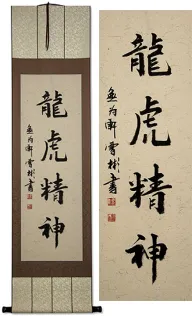
13. The Spirit of Dragon and Tiger
14. Purified Spirit / Enlightened Attitude
15. Beautiful Spirit
17. Dragon Spirit
18. The Spirit of the Dragon Horse
19. The Spirit of the Dragon Horse and Power of a Tiger
20. Morality of Mind
21. Lingering Mind
24. Inner Peace
25. Independent Spirit / Independent Heart
26. Inner Beauty / Beauty of Spirit
27. Beautiful Heart / Beautiful Spirit
28. Devotion / Dedication / Attentive / Focused
29. Wolf Spirit / Soul of a Wolf
30. Heart and Soul
31. Soul Mates
32. Lost Soul
34. Free Spirit
36. Goddess of Beauty / Beautiful Spirit
37. Spirit Of The Dragon Martial Arts
38. Spiritual Strength / Strength of Spirit
39. Life Energy / Spiritual Energy
40. Peaceful Heart
41. Yoga
42. Rai / Rei
43. Listen to Your Heart / Follow Your Heart
44. Goddess
45. Shinto
46. Three Treasures of Chinese Medicine
47. Jin Shin Jyutsu
48. Seishin Budo
49. Energy Sword Body in Concert
50. Shoshin-Ryu
52. Immovable Mind
Warrior Soul / Heroic Spirit
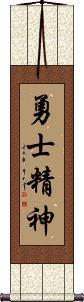
勇士精神 can be translated as the warrior's spirit or warrior's soul. The first two characters can be translated as “warrior” or literally “brave soldier/man,” although some will translate this word as “hero.” Therefore, this is also how to say “heroic spirit.”
The second two characters mean vigor, vitality, drive, spirit, mind, heart, mental essence, and psychological component. Basically “your soul.”
We have two versions of this phrase. The only difference is the first two and last two characters are swapped. The version here suggests that you admire or like the idea of the spirit of a warrior. The other version suggests that you are the warrior or hero.
Warrior Soul / Spirit of a Fighter
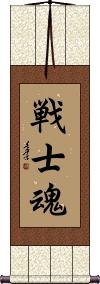
戦士魂 is “warrior soul” or “warrior spirit” in Japanese.
Here's the breakdown of the Kanji:
戦士 (senshi) warrior; soldier; combatant; fighter.
魂 (damashii/tamashii) soul; spirit; can sometimes mean “ghost.”
Mind Body Spirit
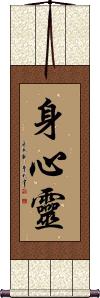
身心靈 is probably the best way to express the idea of “Body, Mind, and Spirit” in Chinese and old Korean Hanja. We are actually using the word “heart” here because, for thousands of years, the heart was thought to be the place where your thoughts, feelings, and emotions came from. We do something similar in the west when we say “warm-hearted” or “I love you with all of my heart.” In this context, heart = mind in Asian language and culture.
The very literal translation of these three characters is “body, heart & spirit,” which could also be interpreted as “body, mind & soul.”
We have arranged these characters in this order because it simply “feels” like the proper order in the Chinese language. Word lists like this are not so common for calligraphy artwork, so we must be careful to put them in the most natural order. It should be noted that this is not a common title in Asia, nor is it considered an actual phrase (as it lacks a clear subject, verb, and object).
 In Japanese Kanji, they use an alternate form of the character for soul or spirit. If you want this using the Japanese alternate, please click on the Kanji shown to the right instead of the button above.
Japanese disclaimer: This is not a natural phrase/list in Japanese. While not totally-natural in Chinese, this word list is best if your audience is Chinese.
Spirit / Spiritual Essence
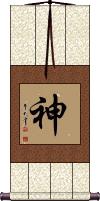
神 is the simplest way to write spirit in Chinese, Japanese Kanji, and old Korean.
This single character alone will conjure up ideas of the spiritual world. 神 can also be translated as “vital awareness” as in the fact that one must know they exist to exist (I think, therefore, I am).
Other translations include:
God, deity, mysterious, divine essence, lively, spiritual being, divinity, supernatural, soul, mind, nerves, and energy. In some extended context, it can mean genius or unusual.
Japanese romanizations vary a lot when this character is combined into other words. However, shin is the original pronunciation taken from Chinese into Japanese. You'll also see it romanized as kami, gami, jin, and a few others, depending on context.
Soul / Spirit
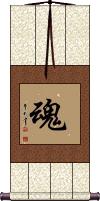
魂 means soul or spirit as in the immortal soul that can be detached from the body.
This can also refer to one's Yang energy or spirit.
In the Buddhist context, this can be the soul, conscious mind, or vijñāna.
Spirit
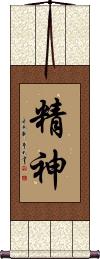
精神 is the kind of spirit you have if you perform well in sports or competitions. It is the idea of having a good attitude and putting your all into something - so much so that others can see or feel your spirit. It is the essence of your being that can only be subjectively described because there are no words that can fully explain what “spirit” really is.
For your information:
My Japanese dictionary further tries to explain this word by comparing it to mind, soul, heart, or intention.
My Chinese dictionary compares these characters to meanings like vigor, vitality, drive, and mentality.
My Korean dictionary defines this as mind, spirit, and soul.
Soul of a Warrior
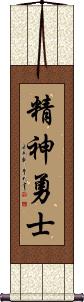
精神勇士 can be translated as the spirit or soul of a warrior. The first two characters can be translated as vigor, vitality, drive, spirit, mind, heart, mental essence, and psychological component. Basically, “your soul.”
The second two characters mean “warrior” or literally “brave soldier/man,” although some will translate this word as “hero.” Therefore, this is also how to say “soul of a hero.”
Note: This title is best for Chinese and old Korean. It does make sense in Japanese but is not a common or natural Kanji combination in Japanese.
We have two versions of this phrase. The only difference is the first two and last two characters are swapped. The version here suggests that you are the warrior or hero. The other version suggests that you admire or like the idea of the spirit of a warrior.
Spirit / Soul
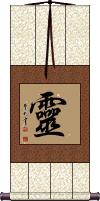
靈 is spirit or soul in Chinese, Japanese Kanji, and old Korean Hanja.
If you look in the dictionary, you'll also find definitions for this character like:
quick; alert; efficacious; effective; departed soul; coffin; spiritual; energy; effective; clever.
There is a modern Japanese version of this character. The button above will get you the traditional/ancient form. But, if you want the modern Japanese, click on the Kanji to the right instead.
Beautiful Soul
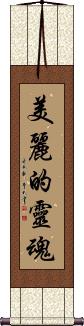
美麗的靈魂 means “Beautiful Soul” in Chinese.
The first two characters mean beautiful, beauty, or gorgeous.
The middle character connects the ideas (a possessive article).
The last two characters mean soul or spirit.
Ghost / Soul / Spirit
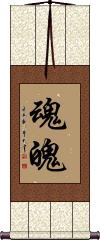
魂魄 is a Chinese, Japanese Kanji, and old Korean Hanja term for ghost, soul, or spirit.
It's used in the context of Buddhism as:
Animus and anima; the spiritual nature or mind, and the animal soul; the two are defined as mind and body or mental and physical, the invisible soul inhabiting the visible body, the former being celestial, the latter terrestrial.
Tao / Dao of the Heart / Soul
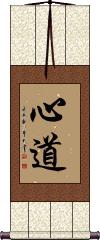
心道 means “The Way of the Heart” or “The Way of the Soul.” The first character means “heart” but can also mean soul, spirit, mind, or your essence. In this case, it is most accurately translated with the heart or soul meaning.
The second character is Dao as in Daoism. Please note, this is the same thing as Tao as in Taoism (just Romanized differently - it's always been the same in Chinese for about 2300 years.
Beautiful Soul
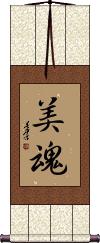
美魂 is a very short or abbreviated way to say “Beautiful Soul” in Japanese.
There is a more extended version that might be a little more natural and also closer to the intended meaning. This short title is often translated awkwardly as “Beauty Soul” in Japanese.
Beautiful Soul
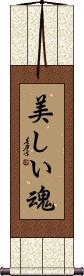
美しい魂 is a common way to write “Beautiful Soul” in Japanese.
Note: Because this selection contains some special Japanese Hiragana characters, it should be written by a Japanese calligrapher.
The Spirit of Dragon and Tiger
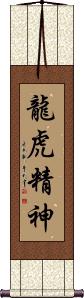
龍虎精神 means the spirit of the dragon and tiger.
It speaks to the vitality and vigor that is the nature of these two creatures.
Beyond “spirit,” the last two characters can also mean mind, soul, or heart. Therefore, you can also say this means “Heart of the Dragon and Tiger,” etc.
龍虎精神 is often titled “Ryukoseishin” in many Japanese martial arts.
Purified Spirit / Enlightened Attitude
A Japanese martial arts title/concept
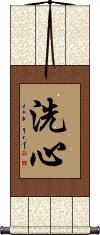
The first Kanji alone means to wash, bathe, primness, cleanse or purify.
The second Kanji means heart, mind, soul, or essence.
Together, these two Kanji create a word defined as “purified spirit” or “enlightened attitude” within Japanese martial arts.
洗心 is one of the five spirits of the warrior (budo) and is often used as a Japanese martial arts tenet. Under that context, it's often defined as a spirit that protects and harmonizes the universe. Senshin is a spirit of compassion that embraces and serves all humanity and whose function is to reconcile discord in the world. It holds all life to be sacred. It is the Buddha mind.
This title will only be familiar to Japanese who practice certain martial arts. Others may not recognize this word at all.
洗心 does not show up as a word in too many Chinese dictionaries, but it can be read and has the same meaning in Chinese.
 There is an issue with the first character. The original, and probably most correct version is shown above. However, many dojo documents and other sources have used a more simple first character. Arguments ensue about which version is correct. If you want to be correct in the Japanese language, use the "Select and Customize" button above. If you want to match the Kanji used by your dojo, click the Kanji shown to the right. There is a slightly different meaning with this first character which means before, ahead, previous, future, precedence.
Beautiful Spirit
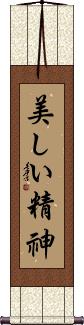
美しい精神 is a common way to write “Beautiful Spirit” in Japanese.
Note: Because this selection contains some special Japanese Hiragana characters, it should be written by a Japanese calligrapher.
Heart / Mind / Spirit
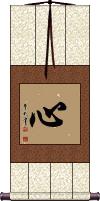
心 would often be translated as “heart.”
However, because it was believed in Chinese culture for thousands of years that your consciousness and thoughts came from the big red organ in the middle of your chest, it also means “mind” or “spirit” and sometimes even “soul.”
In Korean, beyond heart, mind, and spirit, this character can mean moral, nature, mind, affections, intentions, core, and center. In fact, it is used in Chinese to mean “center” as well but only with another character in front of it. For instance, “medical center” or even “shopping center.” Separately and alone, it will not be read with that “center” meaning unless thought of as “the center of your soul.”
Dragon Spirit
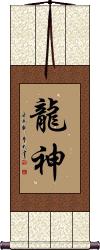
龍神 is a Chinese, Japanese Kanji, and old Korean Hanja title that can mean “dragon god,” “dragon king,” or “dragon spirit.”
In the context of Buddhism, this is one of eight kinds of spiritual beings found in Mahāyāna texts.
The Spirit of the Dragon Horse
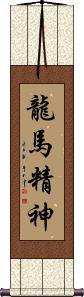
龍馬精神 is an old proverb that is used to wish someone good health and success combined as a great compliment.
The meaning is “The vigor and spirit of the legendary dragon-horse.” These four characters are often accompanied by four more which mean “...and the power and prestige of the tiger.” Here we are just offering the first part which is considered the short version.
By giving a wall scroll like this to someone, you were either wishing or telling them that they have an amazing quality. There is also a suggestion of good health - at least anyone with the vigor of a dragon horse would seem to also be in good health.
Note: In Japanese, this would be read as the spirit of 坂本龍馬 (Sakamoto_Ryōma), a beloved rebel who help abolish the old Japanese feudal system. This can be confusing, so I am declaring this proverb to be Chinese only.
The Spirit of the Dragon Horse and Power of a Tiger
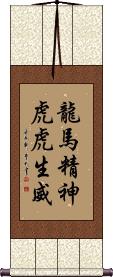
龍馬精神虎虎生威 is an old proverb that is used to wish someone great health and success combined as a great compliment.
The meaning is “The vigor and spirit of the legendary dragon-horse and the power and prestige of the tiger.”
By giving a wall scroll like this to someone, you were either wishing or telling them that they have these qualities. There is also a suggestion of good health - at least anyone with the vigor of a dragon horse would seem to also be in good health.
Morality of Mind
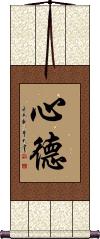
The idea of 心德 or “morality of mind” goes along with 行德 or “wu de” (martial morality or virtues of the warrior).
Here, the first character is a representation of your heart or mind.
The second character refers to morality or virtue.
This can also be translated as “morality of heart,” “virtue of heart,” or “virtue of the mind.”
Since ancient times in Asia, the idea of your mind (where your soul resides and your thought originates) has been associated with the heart. Just as in western culture, where we say “it comes from the heart” or “heartfelt emotions,” there is a belief that your heart and mind are one and the same (medical science now begs to differ).
See Also: Morality of Deed | Martial Morality
Lingering Mind
Zanshin
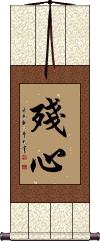
First off, 殘心 should only be used in the context of Japanese martial arts. In Chinese, it's a rather sad title (like a broken heart). In Chinese, the first character alone means destroyed, spoiled, ruined, injured, cruel, oppressive, savage, incomplete, or disabled. However, in Japanese, it's remainder, leftover, balance, or lingering.
The second character means heart, mind, soul, or essence in both languages.
殘心 is one of the five spirits of the warrior (budo) and is often used as a Japanese martial arts tenet. Under that context, places such as the Budo Dojo define it this way: The spirit of zanshin is the state of the remaining or lingering spirit. It is often described as a sustained and heightened state of awareness and mental follow-through. However, true zanshin is a state of focus or concentration before, during, and after the execution of a technique, where a link or connection between uke and nage is preserved. Zanshin is the state of mind that allows us to stay spiritually connected, not only to a single attacker but to multiple attackers and even an entire context; a space, a time, an event.
 In modern Japan (and Simplified Chinese), they use a different version of the first character, as seen to the right. Click on this character to the right instead of the button above if you want this modern Japanese version of lingering mind / zanshin.
Mind of the Beginner
Shoshin
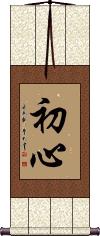
初心 is often translated in Japanese as “beginner's mind” or “beginner's spirit.”
In Chinese, the dictionary definition is “one's original intention.”
The first character means first, initial, primary, junior, beginning, or basic.
The second character means heart, mind, soul, or essence.
初心 is one of the five spirits of the warrior (budo) and is often used as a Japanese martial arts tenet. Under that context, places such as the Budo Dojo define it this way: The state of shoshin is that of a beginners mind. It is a state of awareness that always remains fully conscious, aware, and prepared to see things for the first time. The attitude of shoshin is essential to continued learning.
Enthusiasm / Warm-Hearted
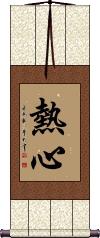
熱心 literally means “warm-hearted” (can also mean warm-spirited or warm-souled).
This is one of a few ways to say Enthusiasm in Chinese, Japanese Kanji, and old Korean Hanja.
熱心 is also used to express the ideas of earnestness or eagerness.
Can mean “zeal” in Japanese.
Inner Peace
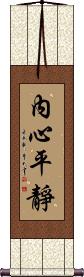
內心平靜 is a Chinese and Japanese phrase that is a direct translation of the western idea of inner peace.
The first two characters contain the idea of “heart,” “innermost being,” or “deep in the/your inner mind.”
The last two characters mean “tranquil” and “serene.”
I have seen this phrase used as “inner peace” for art prints and even on the side of coffee cups. But I think the translation is too literal. It feels like a direct translation from English rather than a nicely composed Chinese or Japanese phrase. See my other entries for “inner peace.”
See Also: Serenity | Simplicity | Peace
Independent Spirit / Independent Heart
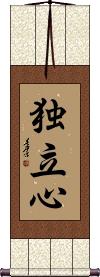
獨立心 means independent spirit or independent heart in Japanese.
The first two characters mean independent or independence. The third character means spirit, heart, or mind.
獨立心 is a Japanese term, although Chinese people could guess the meaning (the characters make sense individually in Chinese but are not often used this way). Also, the first character would be written 獨 in Traditional Chinese versus 独 which is the Simplified Chinese and modern Japanese version.
Inner Beauty / Beauty of Spirit
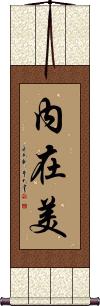
內在美 is a title that speaks of beauty on the inside.
It's not about outward or physical beauty but rather the inner beauty possessed by someone. This can also be translated as “beauty of spirit.”
Inner Beauty / Beauty of Spirit
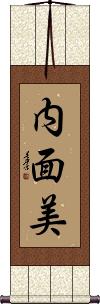
内面美 is a three-character title that speaks of beauty on the inside.
It's not about outward or physical beauty but rather the inner beauty possessed by someone. This can also be translated as “beauty of spirit.”
Beautiful Heart / Beautiful Spirit
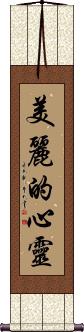
美麗的心靈 means a beautiful heart, a beautiful mind, or a beautiful spirit in Chinese.
Devotion / Dedication / Attentive / Focused
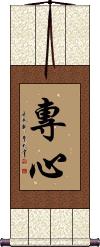
專心 makes a word that means “paying attention with your heart.”
It's often translated as “dedication,” as in “be absorbed in” or “concentrate one's efforts.” It's also used to mean “with the single mind,” “whole-heartedly,” “paying attention,” “undivided attention,” “concentration (-ed),” “engrossed,” “devotionally (listening/watching),” and/or “attentive.”
The first character means “for a particular person, occasion, or purpose,” “focused on one single thing,” “concentrated,” and sometimes, “special.”
The second character means “heart” or “mind” by itself.
My favorite translation, which comes from the Oxford Advanced Chinese/English Dictionary, is, “wholehearted devotion.”
If it seems like the meaning of this word is quite open, you are correct. The context in which the word is used matters a lot. It can mean different things depending on how you use it. This makes it kind of nice as you can decide what this means to you (within some limits). This is always positive in meaning, so even if a Chinese person reads it differently than you, it will still have a good meaning.
 In Japanese, they tend to use a variation of the second character which has one less stroke. If you want your calligraphy written this Japanese form, please click on the Kanji shown to the right instead of the button above. Note: Japanese and Chinese people will recognize either form.
Wolf Spirit / Soul of a Wolf
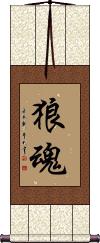
狼魂 means wolf spirit, but is an unusual title in Chinese and Japanese.
Many people have searched for this title, so I added it. The wolf is not usually seen in a positive light in Asian culture, so this may not be the best title to label yourself.
Heart and Soul
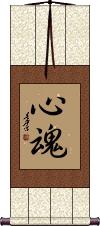
心魂 is “heart and soul” in Japanese Kanji.
The first character means heart (but can also mean mind or soul).
The last character means soul or spirit (spiritual essence).
Heart and Soul
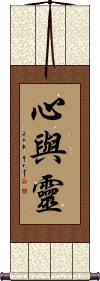
心與靈 is “heart and soul” in Chinese.
The first character means heart (but can also mean mind or soul).
The middle character is like the English “and.”
The last character means soul, spirit, or spiritual energy.
Soul Mates
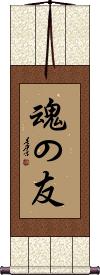
魂の友 is one of a few ways to write “Soul Mates” in Japanese.
The first Kanji means soul, spirit, ghost, immortal soul, the mind, or conscious mind. From Sanskrit, it's Vijñāna.
The middle character is a Japanese Hiragana connecting or possessive article that links the two ideas together.
The last Kanji means friends or friendship.
Soul Mates
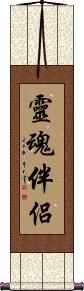
靈魂伴侶 is the literal translation of “Soul Mates.”
This is kind of the western way to express “soul mates” but translated into Chinese, Japanese Kanji, and old Korean Hanja.
The first two characters mean “soul” or “spirit.”
The second two characters mean “mate,” “companion” or “partner.”
Although not the most common title, these characters have good meaning and will be received well in Chinese, Japanese, and Korean. It's a universal title!
Lost Soul
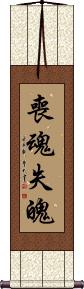
喪魂失魄 is a Chinese idiom that means “lost soul, vanished spirit.”
It relays a feeling of being distraught, at a loss, or heartbroken.
Spiritual Soul Mates
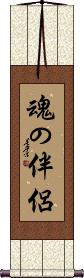
魂の伴侶 is a Japanese-only title for soulmates.
魂 means soul, spirit, immortal soul (the part of you that lives beyond your physical body), or the conscious mind. In the Buddhist context, this is vijñāna or viññāṇa (consciousness, life force, or mind).
の is a possessive article that connects everything here.
伴侶 means mates, companions, partners, and spouses.
Free Spirit
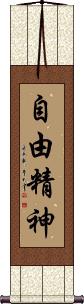
The first two characters mean freedom or liberty.
The second two characters mean spirit, heart, mind, or soul.
Together, 自由精神 is a title that is very similar to the English term “free spirit.”
See Also: Freedom | Independence
Free Spirit
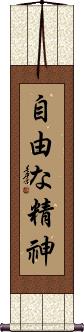
自由な精神 is very similar to the English term “free spirit.”
The first two characters mean freedom or liberty.
The middle character is a connecting Hiragana which is needed for Japanese grammar.
The last two characters mean spirit, heart, mind, or soul.
See Also: Freedom | Independence
Independent Spirit
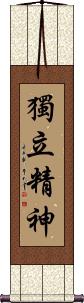
獨立精神 means independent spirit in Chinese.
The first two characters mean independent, independence, or to stand alone.
The last two characters mean spirit, spiritual, vigor, vitality, drive, mind, consciousness, thought, essence, heart, or soul.
With this information, you can make your translation combination such as “independent heart,” “stand-alone spirit,” or more creatively, “the drive to stand alone” in English. There are a lot of ways to interpret 獨立精神.
Goddess of Beauty / Beautiful Spirit
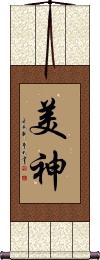
In Chinese, 美神 means Goddess of Beauty.
The first character means beauty or beautiful.
The second character means spirit (can also mean god, goddess, or soul).
Some will use this as a short way to say, “Beautiful Spirit.”
This has a similar meaning in Japanese but is used more often as a female given name in Japan. As a Japanese given name, it can be pronounced Mikami, Mikan, or Binasu.
Spirit Of The Dragon Martial Arts
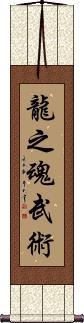
龍之魂武術 is the title Spirit Of The Dragon Martial Arts in Chinese.
This can also be translated as “Dragon Soul Martial Arts.”
Spiritual Strength / Strength of Spirit
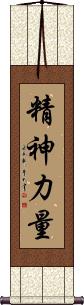
精神力量 is a title that speaks of one's soul or spirit and the capacity or strength that soul possesses.
The first two characters mean mind, heart, spirit, and/or soul.
The last two characters mean strength, capacity, or ability.
Note: Separately, these are two words in Japanese and can be pronounced, but this does not make a natural title in Japanese (best if your audience is Chinese).
Life Energy / Spiritual Energy
Chi Energy: Essence of Life / Energy Flow
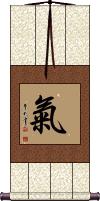
This 氣 energy flow is a fundamental concept of traditional Asian culture.
氣 is romanized as “Qi” or “Chi” in Chinese, “Gi” in Korean, and “Ki” in Japanese.
Chi is believed to be part of everything that exists, as in “life force” or “spiritual energy.” It is most often translated as “energy flow” or literally as “air” or “breath.” Some people will simply translate this as “spirit,” but you must consider the kind of spirit we're talking about. I think this is weighted more toward energy than spirit.
The character itself is a representation of steam (or breath) rising from rice. To clarify, the character for rice looks like this: 
Steam was apparently seen as visual evidence of the release of “life energy” when this concept was first developed. The Qi / Chi / Ki character is still used in compound words to mean steam or vapor.
The etymology of this character is a bit complicated. It's suggested that the first form of this character from bronze script (about 2500 years ago) looked like these samples: 

However, it was easy to confuse this with the character for the number three. So the rice radical was added by 221 B.C. (the exact time of this change is debated). This first version with the rice radical looks like this: 
The idea of Qi / Chi / Ki is really a philosophical concept. It's often used to refer to the “flow” of metaphysical energy that sustains living beings. Yet there is much debate that has continued for thousands of years as to whether Qi / Chi / Ki is pure energy or consists partially or fully of matter.
You can also see the character for Qi / Chi / Ki in common compound words such as Tai Chi / Tai Qi, Aikido, Reiki, and Qi Gong / Chi Kung.
In the modern Japanese Kanji, the rice radical has been changed into two strokes that form an X.
 The original and traditional Chinese form is still understood in Japanese, but we can also offer that modern Kanji form in our custom calligraphy. If you want this Japanese Kanji, please click on the character to the right instead of the “Select and Customize” button above.
More language notes: This is pronounced like “chee” in Mandarin Chinese, and like “key” in Japanese.
This is also the same way to write this in Korean Hanja where it is Romanized as “gi” and pronounced like “gee” but with a real G-sound, not a J-sound.
Though Vietnamese no longer use Chinese characters in their daily language, this character is still widely known in Vietnam.
See Also: Energy | Life Force | Vitality | Life | Birth | Soul
Peaceful Heart
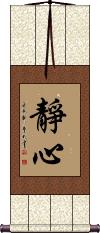
靜心 is how to write “peaceful heart” in Chinese.
The first character means peaceful, calm, and quiet. The second means heart but can also mean mind, soul, or spirit.
Because the word for heart/mind/soul is interchangeable in Chinese, this can also be translated as “a peaceful soul” or “a quiet mind.”
I have also seen this translated as “placid temperament” or “spirit of serenity,” especially in Japanese.
 While they once used the same first character form in Japan, they now use a slightly-simplified version in modern Japan (after WWII). This version is shown to the right, and can be selected for your wall scroll by clicking on that Kanji instead of the button above.
Yoga
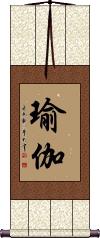
瑜伽 is probably the most common and universal title for Yoga.
In Chinese and Japanese, this is considered a Buddhist practice. 瑜伽 is really a loanword from an original Buddhist Sanskrit word.
Yoga can also be written 瑜誐 or 遊迦. The literal meaning is a yoke, yoking, union, especially an ecstatic union of the individual soul with a divine being or spirit and the individual soul with the universal soul.
Note: Yoga is sometimes written incorrectly as 瑜珈 in Chinese. Watch out for that.
Rai / Rei
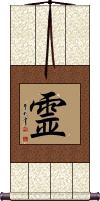
霊 means soul or spirit.
Sometimes 霊 can be a departed soul or ghost. 霊 is actually a Japanese variant of the Chinese character 靈 (and would be recognized in Chinese).
I titled this as Rai because 霊 was romanized as Rai and represented a fictional superhero that appeared in books published by Valiant Comics.
In Japanese, this can be the given name Rei or Tama. It can also be the Japanese surname Mitama or Tamazaki.
Listen to Your Heart / Follow Your Heart
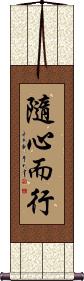
隨心而行 is the closest way to express this idea in Chinese. Literally translated, this phrase means “Allow your heart to dictate your behavior” or “Let your heart guide your conduct” in Chinese. You could also translate this as “follow your heart.” Or, with a bit of imagination, it could mean: “let your spirit be your guide.”
Note that in some cases, “heart” can mean “mind,” “soul” or even “spirit” in Chinese. In ancient China, it was thought that the big pumping organ in your chest was where your thoughts came from, or where your soul resides.
Ancient western thought followed a similar belief. Thus phrases like “I love you with all my heart” and “I give you my whole heart.”
Goddess
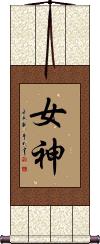
女神 is Goddess from English or Dea from Latin in both Chinese and Japanese.
The literal meaning:
女 = Female or woman.
神 = Spirit, deity, soul, or saint.
Shinto
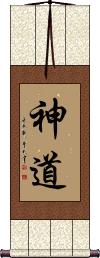
神道 is how to write Shinto, a Japanese national religion.
The meaning is “Way of the Gods.”
This term also has meaning for Chinese Buddhists, where it means the spirit world of devas, asuras, and pretas. It can also be understood as doctrines concerning the soul.
Three Treasures of Chinese Medicine
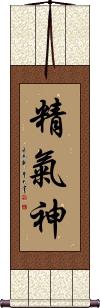
精, 氣, 神 are the characters jing, qi, and shen.
As a set, these three characters are known in English as the treasures of traditional Chinese medicine, the treasures of Qi Gong, or the three treasures of Taoism / Daoism.
Sometimes this set is titled 三寶 (sānbǎo) or “three treasures,” but here, we're writing each treasure out.
Here's how these characters are perceived in this context...
Jing: nutritive essence; refined; perfected; pure
Qi: vitality; energy; force; breath; vigor
Shen: spirit; soul; mind; being
To keep it simple, you can use “essence, vitality, and spirit” to define these.
Jin Shin Jyutsu
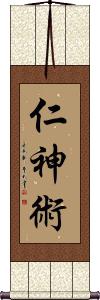
仁神術 is Jin Shin Jyutsu or Jin Shin Jutsu.
This is a practice of calming the mind and clearing the flow of Qi energy in the body. Jin Shin Jyutsu has some commonality with the practice of Reiki.
A good translation of 仁神術 would be “Benevolent Spirit Method.”
We can break that down into all of the possible meanings:
仁 = benevolence (esp. as a virtue of Confucianism), consideration, compassion, humanity, charity, kindness, or virtue.
神 = deity, soul, spirit, mysterious, psyche, god, divinity, spiritual powers, deva, divine, spiritual, or supernatural.
術 = way, method, means, art, trick, or plan. The correct romaji for this 術 Kanji should be “jutsu.” However, in martial arts, this is often written “jitsu” but in this case, “jyutsu” became common.
Seishin Budo
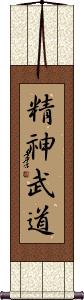
精神武道 is the Japanese martial arts title, Seishin Budo.
The first two characters, 精神, can mean vigor, vitality, drive, spiritual, mind, spirit, soul, heart, ethos, attitude, mentality, will, intention, essence, and fundamental significance.
The last two characters, 武道, are the Japanese word for martial arts (literally the Martial Way).
This title can also be romanized as Seshin Budou or Seishin Budō.
Energy Sword Body in Concert
Spirit, Sword & Body as One
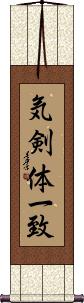
气剑体一致 often gets translated as “Mind Sword Body,” or “Spirit, Sword, and Body as One.” But I think these translations don't tell you enough about what this is really saying.
In this context, 気, which is the modern Japanese version of 氣, means spiritual and unseen energy or “life energy.” In some cases, 気 can be translated as spirit, feeling, or nature. If defined as the mind, it's more about the invisible or intangible parts of one's mind (or soul).
剣 is the Japanese version of 劍 meaning sword.
体 is the modern Japanese version of 體 meaning body.
The Kanji 一 means one, and in this case, suggests “all in one.”
The Kanji 到 means to send, deliver, or convey. But together, 一到 suggests all these things in agreement, union cooperation, or in concert.
Note: Arguments exist as to whether this should be romanized as Kikentaiitchi, Kikentaiicchi, or kikentaiichi. Technically, if you drop the last character, you get 気剣体一 and kikentaiichi (ki ken tai ichi), which is also a valid phrase.
Shoshin-Ryu
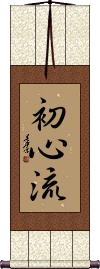
初心流 is often translated in Japanese as “beginner's mind style,” “beginner's spirit method,” or “beginner’s-mind school”
The first character means first, initial, primary, junior, beginning, or basic.
The second character means heart, mind, soul, or essence.
The third character means style, method, or some will translate it as a school.
Please note, there is more than one martial arts school that romanizes as Shoshin-Ryu.
Seishin-Kai / Seishinkai
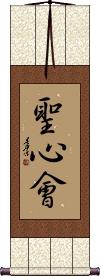
聖心会 is the Japanese martial arts title “Seishinkai” or “Seishin-Kai.”
It literally means “Sacred Heart Association” or “Pure-Heart Club.”
聖 can mean holy, sacred, saint, sage, virtuous, expert, wise and good, upright, or correct.
心 can mean heart, mind, center, core, spirit, soul, or vitality.
聖心 creates a word meaning sacred heart, or the holy mind (that of Buddha).
会 in Japanese means association, club, meeting, assembly, party, gathering, conference, athletic meet, or society.
Immovable Mind
fudoshin
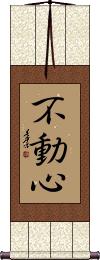
不動心 is one of the five spirits of the warrior (budo) and is often used as a Japanese martial arts tenet.
Under that context, places such as the Budo Dojo define it this way: An unshakable mind and an immovable spirit is the state of fudoshin. It is courage and stability displayed both mentally and physically. Rather than indicating rigidity and inflexibility, fudoshin describes a condition that is not easily upset by internal thoughts or external forces. It is capable of receiving a strong attack while retaining composure and balance. It receives and yields lightly, grounds to the earth, and reflects aggression back to the source.
Other translations of this title include unwavering mind, immovable mind, unwavering composure, imperturbability, steadfastness, keeping a cool head in an emergency, or keeping one's calm (during a fight).
The first two Kanji alone mean immobility, firmness, fixed, steadfastness, motionless, and idle.
The last Kanji means heart, mind, soul, or essence.
Together, these three Kanji create a title defined as “immovable mind” within the context of Japanese martial arts. However, in Chinese, it would mean “motionless heart,” and in Korean Hanja, “wafting heart” or “floating heart.”
This in-stock artwork might be what you are looking for, and ships right away...
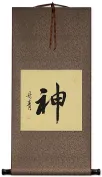

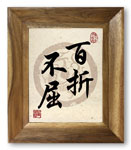
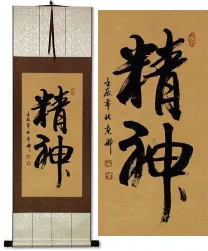
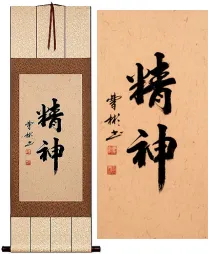


The following table may be helpful for those studying Chinese or Japanese...
| Title | Characters | Romaji (Romanized Japanese) | Various forms of Romanized Chinese | |
| Warrior Soul Heroic Spirit | 勇士精神 | yǒng shì jīng shén yong3 shi4 jing1 shen2 yong shi jing shen yongshijingshen | yung shih ching shen yungshihchingshen |
|
| Warrior Soul Spirit of a Fighter | 戦士魂 | senshi damashii senshidamashii senshi damashi | ||
| Mind Body Spirit | 身心靈 / 身心霊 身心灵 | mi shin rei mishinrei | shēn xīn líng shen1 xin1 ling2 shen xin ling shenxinling | shen hsin ling shenhsinling |
| Spirit Spiritual Essence | 神 | shin / kami | shén / shen2 / shen | |
| Soul Spirit | 魂 | tamashi / kon | hún / hun2 / hun | |
| Spirit | 精神 | sei shin / seishin | jīng shén jing1 shen2 jing shen jingshen | ching shen chingshen |
| Soul of a Warrior | 精神勇士 | jīng shén yǒng shì jing1 shen2 yong3 shi4 jing shen yong shi jingshenyongshi | ching shen yung shih chingshenyungshih |
|
| Spirit Soul | 靈 灵 | ryou / ryo | líng / ling2 / ling | |
| Beautiful Soul | 美麗的靈魂 美丽的灵魂 | měi lì de líng hún mei3 li4 de ling2 hun2 mei li de ling hun meilidelinghun | mei li te ling hun meilitelinghun |
|
| Ghost Soul Spirit | 魂魄 | kon paku / konpaku | hún pò / hun2 po4 / hun po / hunpo | hun p`o / hunpo / hun po |
| Tao Dao of the Heart Soul | 心道 | xīn dào / xin1 dao4 / xin dao / xindao | hsin tao / hsintao | |
| Beautiful Soul | 美魂 | bi tamashi / bitamashi | ||
| Beautiful Soul | 美しい魂 | utsukushii tamashii utsukushiitamashii utsukushi tamashi | ||
| The Spirit of Dragon and Tiger | 龍虎精神 龙虎精神 | ryu ko sei shin ryukoseishin | lóng hǔ jīng shén long2 hu3 jing1 shen2 long hu jing shen longhujingshen | lung hu ching shen lunghuchingshen |
| Purified Spirit Enlightened Attitude | 洗心 先心 | sen shin / senshin | xǐ xīn / xi3 xin1 / xi xin / xixin | hsi hsin / hsihsin |
| Beautiful Spirit | 美しい精神 | utsukushi seishin utsukushiseishin | ||
| Heart Mind Spirit | 心 | kokoro | xīn / xin1 / xin | hsin |
| Dragon Spirit | 龍神 龙神 | ryuu jin / ryuujin / ryu jin | lóng shén long2 shen2 long shen longshen | lung shen lungshen |
| The Spirit of the Dragon Horse | 龍馬精神 龙马精神 | lóng mǎ jīng shén long2 ma3 jing1 shen2 long ma jing shen longmajingshen | lung ma ching shen lungmachingshen |
|
| The Spirit of the Dragon Horse and Power of a Tiger | 龍馬精神虎虎生威 龙马精神虎虎生威 | lóng mǎ jīng shén hǔ hǔ shēng wēi long2 ma3 jing1 shen2 hu3 hu3 sheng1 wei1 long ma jing shen hu hu sheng wei | lung ma ching shen hu hu sheng wei | |
| Morality of Mind | 心德 | xīn dé / xin1 de2 / xin de / xinde | hsin te / hsinte | |
| Lingering Mind | 殘心 残心 | zan shin / zanshin | cán xīn / can2 xin1 / can xin / canxin | ts`an hsin / tsanhsin / tsan hsin |
| Mind of the Beginner | 初心 | sho shin / shoshin | chū xīn / chu1 xin1 / chu xin / chuxin | ch`u hsin / chuhsin / chu hsin |
| Enthusiasm Warm-Hearted | 熱心 热心 | nesshin / neshin | rè xīn / re4 xin1 / re xin / rexin | je hsin / jehsin |
| Inner Peace | 內心平靜 内心平静 | naishin heizyou naishinheizyou naishin heizyo | nèi xīn píng jìng nei4 xin1 ping2 jing4 nei xin ping jing neixinpingjing | nei hsin p`ing ching neihsinpingching nei hsin ping ching |
| Independent Spirit Independent Heart | 獨立心 独立心 | dokuritsushin | ||
| Inner Beauty Beauty of Spirit | 內在美 内在美 | nèi zài měi nei4 zai4 mei3 nei zai mei neizaimei | nei tsai mei neitsaimei |
|
| Inner Beauty Beauty of Spirit | 内面美 | nai men bi / naimenbi | ||
| Beautiful Heart Beautiful Spirit | 美麗的心靈 美丽的心灵 | měi lì de xīn líng mei3 li4 de xin1 ling2 mei li de xin ling meilidexinling | mei li te hsin ling meilitehsinling |
|
| Devotion Dedication Attentive Focused | 專心 / 専心 / 耑心 专心 | sen shin / senshin | zhuān xīn zhuan1 xin1 zhuan xin zhuanxin | chuan hsin chuanhsin |
| Wolf Spirit Soul of a Wolf | 狼魂 | routama / ookami tamashii routama / ookamitamashii rotama / okami tamashi | láng hún / lang2 hun2 / lang hun / langhun | |
| Heart and Soul | 心魂 | shin kon / shinkon | ||
| Heart and Soul | 心與靈 心与灵 | xīn yǔ líng xin1 yu3 ling2 xin yu ling xinyuling | hsin yü ling hsinyüling |
|
| Soul Mates | 魂の友 | tamashii no tomo tamashiinotomo tamashi no tomo | ||
| Soul Mates | 靈魂伴侶 灵魂伴侣 | reikon hanryo reikonhanryo | líng hún bàn lǚ ling2 hun2 ban4 lv3 ling hun ban lv linghunbanlv | ling hun pan lü linghunpanlü |
| Lost Soul | 喪魂失魄 丧魂失魄 | sàng hún shī pò sang4 hun2 shi1 po4 sang hun shi po sanghunshipo | sang hun shih p`o sanghunshihpo sang hun shih po |
|
| Spiritual Soul Mates | 魂の伴侶 | tamashii no han ryo tamashiinohanryo tamashi no han ryo | ||
| Free Spirit | 自由精神 | zì yóu jīng shén zi4 you2 jing1 shen2 zi you jing shen ziyoujingshen | tzu yu ching shen tzuyuchingshen |
|
| Free Spirit | 自由な精神 | ji yuu na sei shin jiyuunaseishin ji yu na sei shin | ||
| Independent Spirit | 獨立精神 独立精神 | dú lì jīng shén du2 li4 jing1 shen2 du li jing shen dulijingshen | tu li ching shen tulichingshen |
|
| Goddess of Beauty Beautiful Spirit | 美神 | mikami | měi shén / mei3 shen2 / mei shen / meishen | |
| Spirit Of The Dragon Martial Arts | 龍之魂武術 龙之魂武术 | lóng zhī hún wǔ shù long2 zhi1 hun2 wu3 shu4 long zhi hun wu shu longzhihunwushu | lung chih hun wu shu lungchihhunwushu |
|
| Spiritual Strength Strength of Spirit | 精神力量 | seishin rikiryou seishinrikiryou seishin rikiryo | jīng shén lì liàng jing1 shen2 li4 liang4 jing shen li liang jingshenliliang | ching shen li liang chingshenliliang |
| Life Energy Spiritual Energy | 氣 气 / 気 | ki | qì / qi4 / qi | ch`i / chi |
| Peaceful Heart | 靜心 静心 | shizugokoro / seishin | jìng xīn / jing4 xin1 / jing xin / jingxin | ching hsin / chinghsin |
| Yoga | 瑜伽 | yu ga / yuga | yú jiā / yu2 jia1 / yu jia / yujia | yü chia / yüchia |
| Rai Rei | 霊 | rei / re | líng / ling2 / ling | |
| Listen to Your Heart Follow Your Heart | 隨心而行 随心而行 | suí xīn ér xíng sui2 xin1 er2 xing2 sui xin er xing suixinerxing | sui hsin erh hsing suihsinerhhsing |
|
| Goddess | 女神 | megami / joshin | nǚ shén / nv3 shen2 / nv shen / nvshen | nü shen / nüshen |
| Shinto | 神道 | shin tou / shin dou shintou / shindou shin to / shin do | shén dào / shen2 dao4 / shen dao / shendao | shen tao / shentao |
| Three Treasures of Chinese Medicine | 精氣神 精气神 | jīng qì shén jing1 qi4 shen2 jing qi shen jingqishen | ching ch`i shen chingchishen ching chi shen |
|
| Jin Shin Jyutsu | 仁神術 | jin shin jutsu jinshinjutsu | rén shén shù ren2 shen2 shu4 ren shen shu renshenshu | jen shen shu jenshenshu |
| Seishin Budo | 精神武道 | seishin budou seishinbudou seishin budo | ||
| Energy Sword Body in Concert | 気剣体一致 / 氣劍體一致 气剑体一致 | ki ken tai icchi kikentaiicchi ki ken tai ichi | ||
| Shoshin-Ryu | 初心流 | shou shin ryuu shoushinryuu sho shin ryu | ||
| Seishin-Kai Seishinkai | 聖心会 / 聖心會 聖心会 | sei shin kai seishinkai | ||
| Immovable Mind | 不動心 | fu dou shin fudoushin fu do shin | ||
| In some entries above you will see that characters have different versions above and below a line. In these cases, the characters above the line are Traditional Chinese, while the ones below are Simplified Chinese. | ||||

Successful Chinese Character and Japanese Kanji calligraphy searches within the last few hours...



